The Best Pasta Makers for 2026: Marcato Atlas, Imperia, KitchenAid and More
By Claire Whitmore. Last updated October 2026.
Disclosure: some links on this page are affiliate links, including Amazon links. If you buy through them we may earn a commission at no extra cost to you. It doesn’t change what we recommend. Details are in our affiliate disclosure.
Fresh pasta is one of the most rewarding things you can make at home, and a good machine turns it from an afternoon project into a weeknight-possible one. Roll silky sheets for lasagna and ravioli, cut ribbons of fettuccine, or let an extruder knead and shape penne for you.
This guide is built on two large hands-on tests. Serious Eats tested 15 pasta makers, including stand mixer attachments, rolling and cutting fettuccine and angel hair, measuring sheet thickness at every setting with digital calipers, and trying gluten-free and eggless doughs with the winners; it also tested 10 electric extruders separately. Food & Wine tested 21 models side by side, from hand-crank and motorized rollers to attachments and extruders, with input from pasta professionals. We didn’t test these machines ourselves.
Quick answer: both Serious Eats and Food & Wine name the Marcato Atlas 150 the best pasta maker. If you own a KitchenAid stand mixer, the KitchenAid Pasta Roller & Cutter set is the top attachment at both outlets, with Antree as Serious Eats’ budget alternative. For hands-off shaped pasta, Serious Eats’ favorite extruder is the Philips Artisan, while Food & Wine likes the less expensive Philips Viva.
Our picks at a glance
| Pasta maker | Type | Thickness settings / thinnest sheet | Who recommends it | Best for |
|---|---|---|---|---|
| Marcato Atlas 150 | Manual roller | 10 settings; about 0.5 mm | Serious Eats best; Food & Wine best overall | Most cooks |
| Imperia Pasta Machine (Model 150) | Manual roller | 6 settings; about 0.9 mm | Serious Eats runner-up; Food & Wine best for beginners | Sturdy value |
| KitchenAid 3-Piece Roller & Cutter Set | Stand mixer attachment | Thinnest 0.75 mm (F&W) | Serious Eats and Food & Wine best attachment | KitchenAid owners |
| Antree Pasta Maker Attachment | Stand mixer attachment | Thinnest about 0.9 mm | Serious Eats best budget attachment | Saving money |
| GVODE 3-Piece Attachment Set | Stand mixer attachment | Rips at second-thinnest | Serious Eats honorable mention | Flour-guard design |
| Philips Artisan Smart Pasta Maker | Electric extruder | N/A (dies) | Serious Eats best extruder | Hands-off shapes |
| Philips Viva Pasta and Noodle Maker | Electric extruder | N/A (dies) | Food & Wine best extruder | Extruding for less |
| CucinaPro Pasta Maker Deluxe Set | Manual roller | Thinnest about 1.58 mm | Food & Wine best value | Beginners on a budget |
Thickness figures are as measured or reported by Serious Eats and Food & Wine. Prices change often; check before you buy.
How we chose
We prioritized machines that ranked well in both outlets’ tests, starting with the one they both put first. We then compared how thin each machine rolls without tearing, how many settings it offers, whether its cutters separate noodles cleanly, stability while cranking, how easy it is to clean, and whether it can grow with you through extra cutter attachments. We note disagreements between the outlets.
Manual, attachment or extruder?
Manual rollers clamp to the counter and use a hand crank. Food & Wine says they’re best for egg dough rolled into sheets for lasagna, ravioli and ribbons, and are more traditional and less expensive, but take more work. Serious Eats adds that they’re quiet and need no other appliance, but you’ll need one hand to crank and one to guide the dough.
Stand mixer attachments use your mixer’s motor so both hands are free. Serious Eats found them much faster in its fettuccine test (6.5 minutes vs. 11 for the Atlas), but you need a compatible mixer, such as one of our favorite stand mixers.
Extruders mix, knead and push dough through dies to make shapes like penne and spaghetti. Food & Wine says they work best with semolina dough and take up the most space.

The best pasta makers
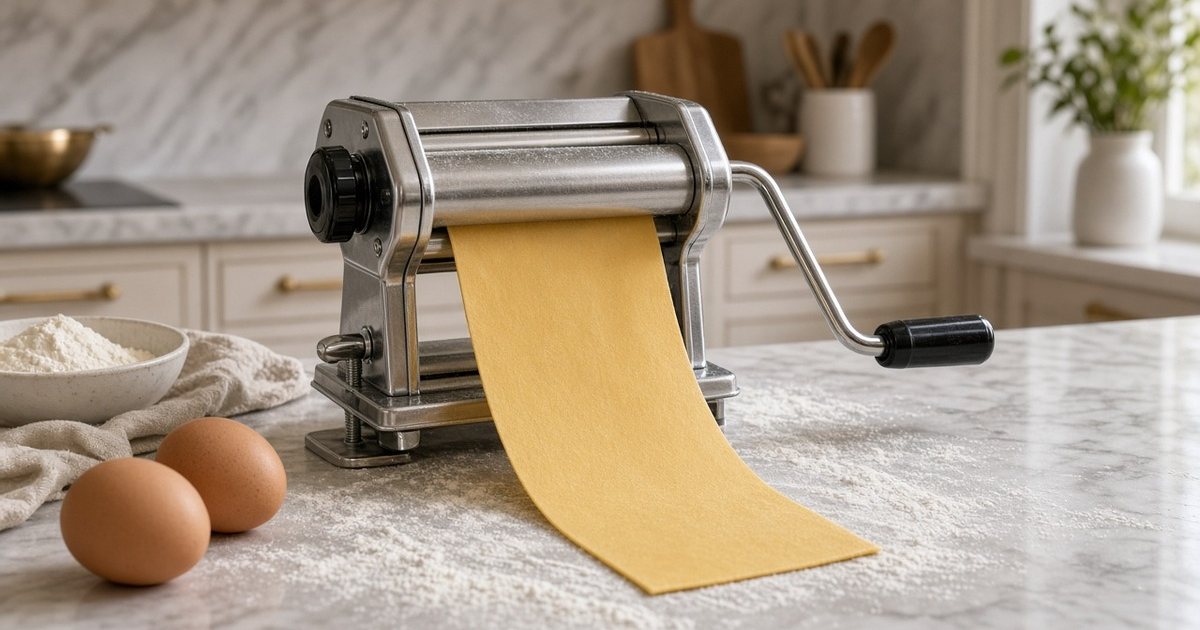
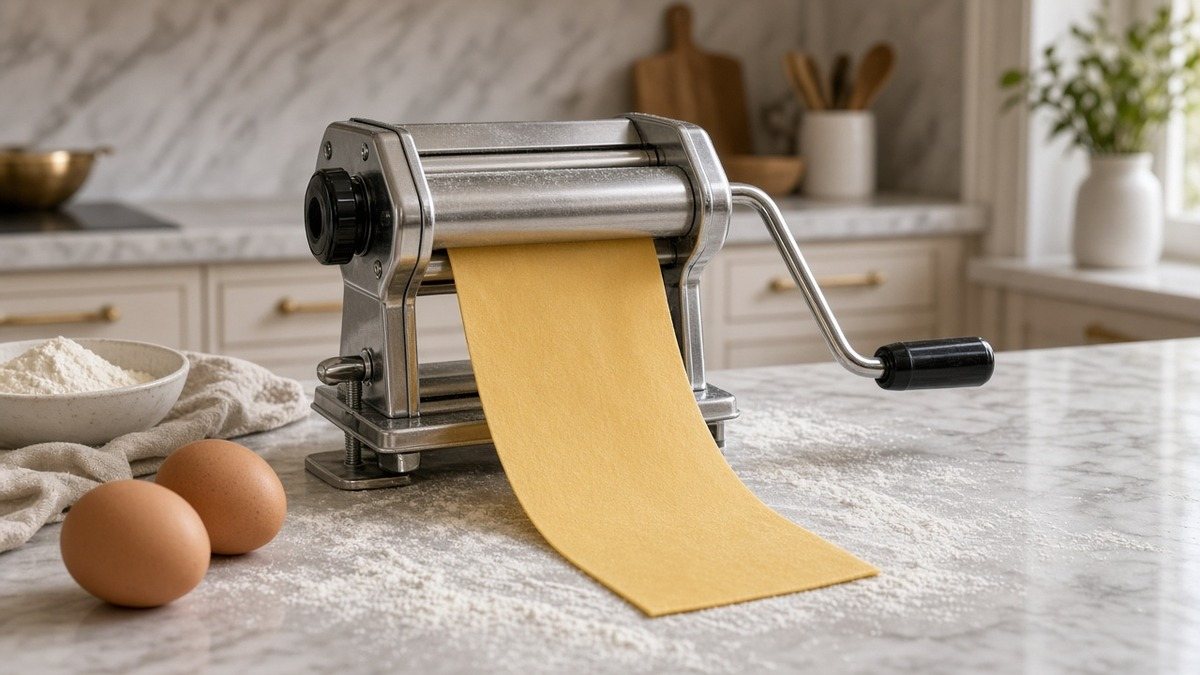
1. Marcato Atlas 150 Classic Stainless Steel Pasta Machine: best overall
Best for: nearly everyone who wants to make fresh pasta.
Serious Eats’ winner rolled dough on its thinnest setting without tearing, cranked smoothly and stably, had an easy-to-read dial and cut cleanly, with no dough stuck in the cutters during testing. It had the most thickness settings (10) and the thinnest sheet (0.5 millimeters) of any manual machine tested, which matters for filled pasta. Many extra cutter attachments are available.
Food & Wine also ranked it first among 21 models: it didn’t jam, pull or fray even with ultra-thin sheets, the handle didn’t slip out mid-crank, and its attachments felt snug and secure. It’s made by a nearly century-old Italian company. Serious Eats’ only quibbles: manual cranking is slower than a motor, and a cleaning brush isn’t included.
Pros
- Thinnest sheets of any manual tested
- Clean cuts
- Lots of optional cutters
Cons
- Slower than electric
- No cleaning brush
2. Imperia Pasta Machine (Model 150): runner-up manual
Best for: beginners and anyone who wants a sturdy Italian classic.
Serious Eats loved its clamp, which never shifted, and its clean spaghetti and fettuccine cuts with no stuck noodles; it includes a cleaning brush and has a comfortable wooden handle. Food & Wine calls it the best for beginners and singled out a detachable tray that helps feed sheets and rest cut pasta.
It has six thickness settings to the Atlas’s 10, and its thinnest sheet measured about 0.9 millimeters in Serious Eats’ test. The crank handle doesn’t lock into the gear, and the dial numbers are printed on the side, so you have to lean over to read them.
Pros
- Rock-solid clamp
- Feeding tray and cleaning brush
Cons
- Fewer settings
- Handle can slip out
3. KitchenAid 3-Piece Pasta Roller & Cutter Attachment Set: best stand mixer attachment
Best for: KitchenAid owners who make pasta often.
Serious Eats found this all-metal set rolled dough thin without tearing or wrinkling and never wobbled; swapping roller for cutter took about 30 seconds. It includes fettuccine and spaghetti cutters, and a 5-piece set adds capellini and lasagnette. Food & Wine says the motor sped sheets through without ripping, and the thinnest setting made a sheet just 0.75 millimeters thick.
You need a compatible KitchenAid mixer, which makes this an expensive route, and three pieces mean more to store.
Pros
- Fast, hands-free rolling
- Durable all-metal build
Cons
- Requires a KitchenAid mixer
- Pricey
4. Antree Pasta Maker Attachment: best budget attachment
Best for: mixer owners who want pasta on a budget.
At less than half the KitchenAid’s cost, the Antree puts the roller and cutters in one compact unit, so you don’t stop the motor to swap pieces, and it includes cleaning brushes. Serious Eats found its thinnest sheet (about 0.9 millimeters) acceptable but not ideal for delicate filled pasta, and about half its fettuccine needed prying apart. No additional cutter shapes are sold.
Pros
- Affordable
- All-in-one design
Cons
- Not as thin
- Cutters don’t fully separate
5. GVODE 3-Piece Pasta Attachment Set: another good attachment
Best for: KitchenAid owners who want a mid-priced set.
Serious Eats liked how easily it locked in and its guard that directs excess flour away from the rollers; sheets came out thin without jamming, and the cutters made fully separated noodles. The dough began to rip at the second-thinnest setting. Food & Wine also liked the cutters but found the many pieces cumbersome to swap.
Pros
- Flour guard
- Clean cuts
Cons
- Tears at the thinnest settings
- Lots of swapping
6. Philips Artisan Smart Pasta & Noodle Maker: best extruder
Best for: hands-off pasta shapes.
Serious Eats’ favorite extruder has an internal scale that tells you how much water to add for the flour you put in, super-sharp cutters that made some of the cleanest pasta in its extruder test, and it pumped out nearly all the dough. A batch took about seven minutes to mix and extrude. The dies aren’t labeled (check the manual), and its penne looked more like ribbed elbows.
Pros
- Built-in scale
- Sharp dies, little waste
Cons
- Unlabeled dies
- Expensive
7. Philips Viva Collection Pasta and Noodle Maker: best value extruder
Best for: trying extruded pasta for less.
Food & Wine’s extruder pick automatically kneads and produces uniform pasta with minimal effort; a single button and dial reduce the chance of user error. It’s mostly plastic, and some dies felt flimsy. Serious Eats says Philips’ Viva model works great and costs about $170 less than the Artisan.
Pros
- Very easy
- Uniform results
Cons
- Mostly plastic
- Bulky
8. CucinaPro Pasta Maker Deluxe Set: best for beginners on a budget
Best for: dipping a toe in before investing.
Food & Wine’s best value manual machine comes with everything you need to start, including cleaning brushes and a ravioli cutter, which other machines didn’t include. It was easy to set up. Its thinnest sheet is about 1.58 millimeters, more than twice as thick as the KitchenAid’s, and its attachments fit loosely compared with the Marcato’s.
Pros
- Low price
- Ravioli cutter included
Cons
- Thicker sheets
- Looser attachments
What to look for
- Thinness. For fettuccine you don’t need to go below 1 millimeter, says Serious Eats, but for ravioli and other filled pasta you want sheets around half a millimeter.
- Clean cutters. The best machines produce fully separated strands; weaker ones fuse noodles that tear when you pull them apart.
- Stability and ergonomics. Serious Eats’ worst models rocked while rolling and needed excessive force.
- Materials. Food & Wine says heavier stainless steel is more stable, durable and rust-resistant, but not dishwasher-safe.
- Room to grow. If you’ll want more shapes, choose a machine with a la carte cutters, like the Atlas.
Tips for better fresh pasta
- Weigh your ingredients. Food & Wine recommends a kitchen scale because flour measured by volume varies.
- Rest egg dough at least 30 minutes, wrapped, before rolling.
- Dust cut noodles with flour or semolina right away so the first strands don’t stick together.
- Don’t wash a hand-crank machine. Serious Eats says to brush off flour and wipe it with a dry cloth, using a skewer or toothpick for stuck dough.
- Egg pasta barely needs drying; Food & Wine says a 30-minute rest on a towel-lined tray or drying rack is plenty.
FAQ
Can you make pasta without a machine?
Yes, with a rolling pin and a knife, but it’s harder to get sheets thin and even. A machine makes consistent results much easier.
Can I use semolina dough in a roller?
Roller machines are best with egg dough. Food & Wine says extruders work best with semolina dough; Serious Eats also tested its winning rollers with an eggless durum and water dough.
Is a manual or electric pasta maker better?
Electric (an attachment or extruder) is faster and frees both hands; manual is cheaper, quieter and needs no other appliance. Serious Eats’ overall favorite is manual.
How do I clean a pasta machine?
Brush off excess flour and wipe with a dry cloth. Don’t submerge a hand-crank machine in water.
The bottom line
Buy the Marcato Atlas 150 if you want one pasta maker that does it all; Serious Eats and Food & Wine both rank it first. KitchenAid owners will love the speed of the KitchenAid roller set (or the Antree on a budget), and the Philips Artisan is the extruder to get if you’d rather press a button and walk away.