The Best Standing Desks for 2026: Uplift V3, Branch Duo, Vari and More
By Claire Whitmore. Last updated October 2026.
Disclosure: some links on this page are affiliate links, including Amazon links. If you buy through them we may earn a commission at no extra cost to you. It doesn’t change what we recommend. Details are in our affiliate disclosure.
A sit-stand desk is one of the best upgrades you can make to a home office. Neither all-day sitting nor all-day standing is good for you. Being able to switch with a button press means you’ll actually move during the day, and you can set the desk to the exact ergonomic height you need, whatever your height.
Our picks draw on Wirecutter’s July 2026 update, which has tested more than 40 standing desks since 2013 with a panel of nearly three dozen people from 4-foot-10 to 6-foot-9, plus testing from WIRED, CNN Underscored, Forbes Vetted and Business Insider. We haven’t tested these desks ourselves. Prices depend heavily on size and options. Ours are starting points from the reviewers.
Quick answer: the Uplift V3 is the best standing desk for most people. It fits users from 4-foot-9 to 6-foot-8, comes in more than 30 desktop finishes and has a 15-year warranty. The Branch Duo is the pick for small spaces and taller users. Get the Vari Electric if stability matters most, or the Ergonofis Sway if you want a real solid-wood top and the budget is there.
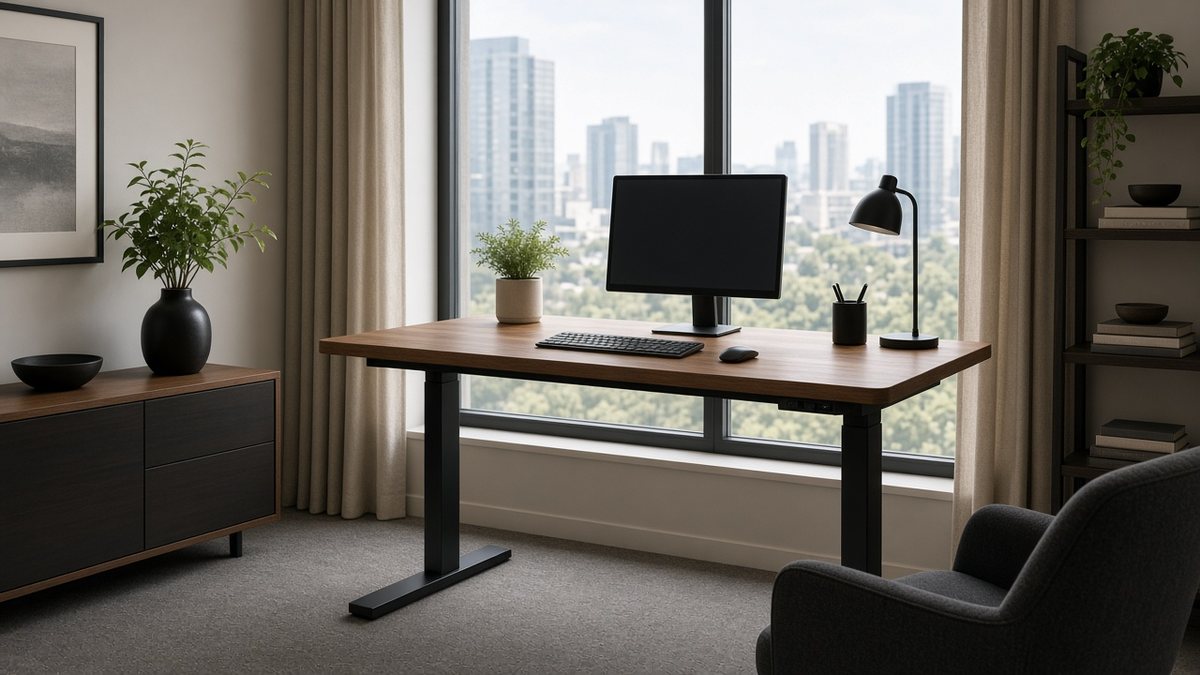
Our picks at a glance
| Pick | Best for | Height range | Starting price* |
|---|---|---|---|
| Uplift V3 | Best overall, most customizable | 22.6 to 48.2 in. (with 1-in. top) | About $599 |
| Branch Duo | Small spaces, taller users | 28 to 47.5 in. | About $549 |
| Vari Electric Standing Desk | Maximum stability | Up to 50.5 in. | Varies by size |
| Secretlab Magnus Pro | Cable management | Varies | About $100 more than Uplift |
| Ergonofis Sway | Solid wood splurge | Varies | About twice the Uplift |
*Starting prices from Wirecutter, January 2026 pricing. Larger tops, wood finishes and keypads add to the cost.
The best standing desks
1. Uplift V3: best overall
Best for: nearly everyone, especially people who want to customize size, finish and accessories.
An Uplift desk has been Wirecutter’s top pick since 2018, and the V3 continues the run. It reacts quickly to the keypad, wobbles very little even at tall heights, and its wider, flatter feet improve stability. It goes 7 inches lower than the V2, so it suits users from 4-foot-9 to 6-foot-8. In testing it was a second or two faster than rivals going from lowest to highest, and testers found it easier to stop at a precise height.
There are more than 30 desktops, from laminates to bamboo to acacia and other hardwoods, plus four frame colors, five grommet colors, several keypads, keyboard trays, and five free accessories with each order. Wirecutter suggests paying about $30 extra for the soft-touch “comfort” keypad with four memory presets. The 15-year warranty covers the frame and, Uplift confirmed, even hairline cracks in desktops. At its very tallest it’s slightly less stable front to back than the Vari.
Pros
- Widest height range
- Huge range of finishes and add-ons
- Fast, precise adjustment
- 15-year warranty
Cons
- Not quite as rock-solid as Vari at full height
- Options add up quickly
2. Branch Duo: best for small spaces
Best for: studio apartments, small home offices and users about 5-foot-8 to 6-foot-5.
The Branch Duo comes in a compact 36-by-24-inch size (there’s also a 48-inch version). That makes it the smallest desk Wirecutter recommends. Its two-stage lifting columns are stable and smooth, and it has a 10-year warranty and a 275-pound lift capacity. Wirecutter’s panelists from 5 feet to 6-foot-9 found comfortable settings, as did a tester who uses an electric wheelchair. CNN Underscored named the full-size Branch Adjustable Standing Desk its best overall, calling it the sturdiest it tested.
The trade-offs are that its paddle-style control, which you lift or press down, frustrated many testers. It also stores only two height presets, and its 28-inch minimum height means the anti-collision sensor won’t detect kids or pets underneath it.
Pros
- Compact footprint
- Stable for its size
- 10-year warranty
- Attractive laminate tops
Cons
- Paddle controls aren’t intuitive
- Only two presets
- Fewer finishes
3. Vari Electric Standing Desk: most stable
Best for: heavy typists, multi-monitor setups and anyone bothered by wobble.
Wirecutter calls the Vari “the sturdiest we’ve tested.” Even at its full 50.5-inch height it barely moved when shoved in any direction. The 1.25-inch desktop and pre-mounted crossbar make it both sturdier and quicker to assemble. WIRED likes Vari’s newer ComfortEdge for its mix of value, style and function, and Vari offers some of the longest warranties around.
The downsides are fewer customization options than the Uplift, a slightly slower response to the keypad, and limited sizes. The Vari Electric now comes only in 60 by 30 and 72 by 30 inches. The ComfortEdge starts at 48 by 30 but costs considerably more.
Pros
- Best stability
- Easy assembly
- Thick desktop
Cons
- Fewer finishes
- Limited sizes
- Slower to respond
4. Secretlab Magnus Pro: best cable management
Best for: gamers and tech-heavy setups that want zero cable clutter.
Wirecutter says the Magnus Pro has the best cable management of any desk it tested. The wiring and cable tray are built into the desk, so there’s no tangle of wires. It’s also sturdier at full height than the Uplift. The magnetic metal desktop lets you snap on Secretlab’s accessories, though some testers didn’t like it.
It comes only in large sizes (60 by 30 or 70 by 31 inches), with no wood finishes, and costs about $100 more than a comparable Uplift. The warranty is shorter: two years on the electronics and five on everything else.
Pros
- Built-in cable management
- Very stable
- Magnetic accessory system
Cons
- Metal-only top
- Large sizes only
- Shorter warranty
5. Ergonofis Sway: solid-wood splurge
Best for: design lovers who want a real hardwood desk.
CNN Underscored calls the Sway a great splurge if you want a real wooden top, and Wirecutter’s panel loved its materials. Wirecutter found the recessed slide keypad hard to use, and assembly was harder than average with snap clamps instead of screws. Its 10-year warranty is shorter than the Uplift’s despite costing about twice as much. Buy it for the craftsmanship, not the mechanics.
Pros
- Beautiful solid wood
- Furniture-grade looks
Cons
- Confusing keypad
- Pricey
- Harder assembly

What about Jarvis?
The Fully Jarvis, now sold by Herman Miller, was a longtime favorite. Wirecutter says its price has risen, its warranty has dropped from 15 to 7 years, and options have shrunk, so it’s no longer a pick. It’s still a good desk if you find it on sale, and many Wirecutter staffers own one. Herman Miller’s four-leg Spout, from $2,500, is sturdy and fast but has a limited height range and doesn’t include a programmable keypad.
How to choose a standing desk
- Height range first. Wayfair’s rule, which Wirecutter found accurate, is your height in inches divided by 2.5 for sitting height and multiplied by 0.6 for standing height. A 5-foot-4 person needs roughly 25.6 inches seated and 38.4 standing.
- Electric, not crank. Wirecutter found hand-crank desks discouraged people from switching positions, and some had load-balancing problems.
- Stability. Look for dual motors, wide feet, a crossbar and a thick desktop. Wobble is most noticeable above 40 inches.
- Warranty. Good desks cost $600 or more and should last a decade. Look for at least five years, and ideally 10 to 15.
- Anti-collision. Sensors should stop the desk if it hits something. Check how low they work.
- Desktop material. Laminate is tough and affordable. Bamboo and hardwood look warmer but need coasters and a desk pad.
Why we don’t recommend cheap standing desks
Wirecutter looked at more than a dozen budget desks priced from $200 to $600 and found consistent problems: split particleboard tops, weight limits around 150 pounds versus about 300 for its picks, narrow height ranges and warranties of one to three years. If you need one anyway, the FlexiSpot EN1 (from about $199) is the best ultra-cheap option Wirecutter tested, but its motor is loud and slow. A desk converter is often the better budget move.
Finish your setup
A standing desk works best with a good chair, an anti-fatigue mat and a monitor arm so the screen sits at eye level whether you’re sitting or standing. Change position every 30 to 60 minutes rather than standing for hours, which can strain your joints and circulation, according to research Wirecutter cites.
FAQ
How long should I stand each day?
There’s no magic number. Alternate between sitting and standing through the day, changing every half hour to an hour, and add short walks.
Do standing desks wobble?
All of them wobble a little at full height. The Vari and Secretlab Magnus Pro were the most stable in Wirecutter’s tests, and the Uplift V3 was close behind.
What size desktop should I get?
A 48-by-30-inch top fits a laptop and one monitor. Choose 60 inches or more for two monitors. For tight rooms, the Branch Duo’s 36-by-24-inch top is the smallest good option.
Can I put my own top on a frame?
Uplift and some other brands sell frames on their own. Make sure your top is thick and rigid enough, and pre-drill pilot holes carefully.
The bottom line
The Uplift V3 is the standing desk to buy: it fits the widest range of people, offers the most finishes and has a 15-year warranty. Choose the Branch Duo for small spaces, the Vari for rock-solid stability, the Secretlab Magnus Pro for cable-free tidiness, and the Ergonofis Sway if real hardwood matters most.