The Best Watch Winders for 2026: Wolf, Barrington, Orbita, Rapport and More
By Claire Whitmore. Last updated October 2026.
Disclosure: some links on this page are affiliate links, including Amazon links. If you buy through them we may earn a commission at no extra cost to you. It doesn’t change what we recommend. Details are in our affiliate disclosure.
An automatic watch is a small machine that runs on motion. Wear it every day and the rotor keeps the mainspring topped up; leave it in a drawer for a couple of days and it stops, which means resetting the time and, on anything with a date, moonphase or perpetual calendar, fiddling with the complications before you can wear it again. A watch winder solves that by gently turning the watch while it isn’t on your wrist, and a good one doubles as a handsome place to keep a watch you care about.
Not everyone needs one. Gear Patrol and Stuff both say a winder is a want rather than a need, most useful for collections and complicated watches. If you have one automatic you wear daily, you can skip this purchase. If you have two or more, or you’re shopping for someone who does, this guide covers the winders worth buying.
We built it on two sets of hands-on reviews: Stuff’s 2026 watch winder guide, where reviewer Spencer Hart ran winders for days at a time with watches from Tudor, Seiko and Christopher Ward, and Gear Patrol’s collector guide, which compares Wolf, Barrington, Orbita, Rapport and Versa models. We didn’t test these winders ourselves.
Quick answer: Stuff’s best overall is the Wolf Cub Double, a two-watch winder in vegan leather with a lock-in cuff and around 900 turns per day. For a single watch, both Stuff and Gear Patrol like the Barrington Automatic Single. For collectors, Rapport London makes six- and nine-watch cabinets.
Our picks at a glance
| Winder | Watches | Power | Who recommends it | Best for |
|---|---|---|---|---|
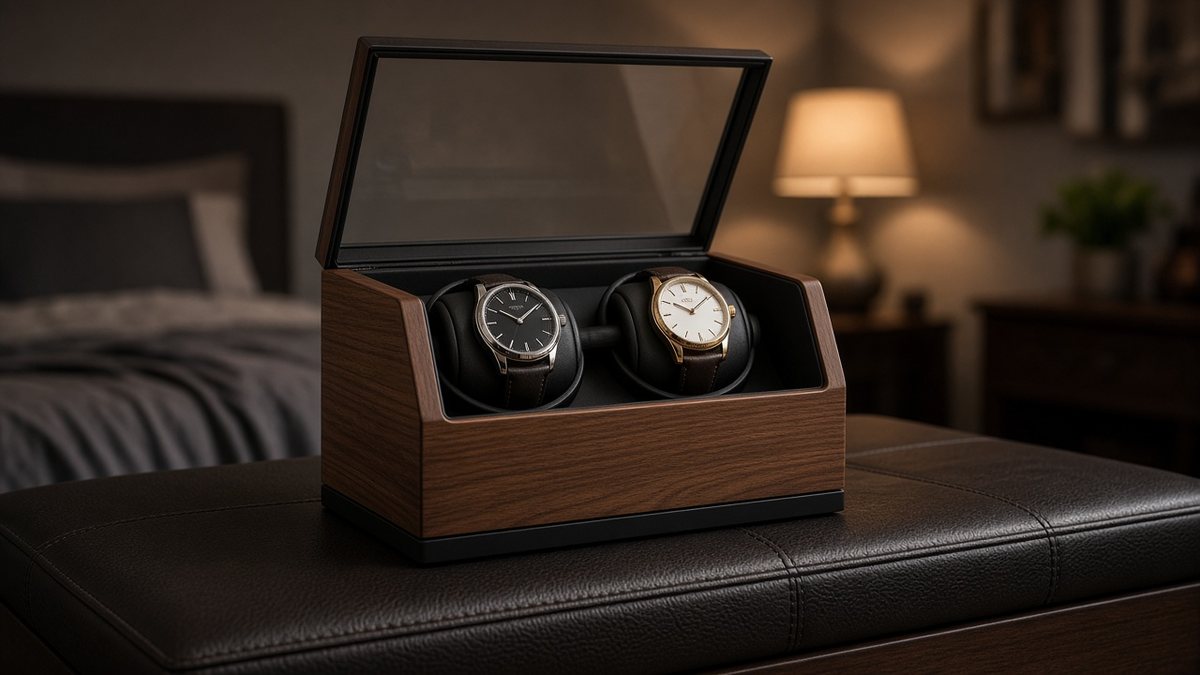
| Wolf Cub Double | 2 | Mains or AA batteries | Stuff best overall | Two-watch rotation |
| Barrington Automatic Single | 1 | Mains or batteries | Stuff best single; Gear Patrol pick | One treasured automatic |
| Wolf Rocket | 1 | Rechargeable, USB-C | Stuff best for travel | Trips and hotel rooms |
| Orbita Sparta | 1 | Mains or batteries | Gear Patrol pick | American-made option |
| Wolf Roadster Triple with Storage | 3 plus storage | Mains or batteries | Gear Patrol pick | Leather showpiece |
| Rapport Formula Six | 6 | Mains | Stuff best for large collections | Display cabinet |
| Rapport Paramount Nine | 9 | Mains | Gear Patrol pick | Serious collectors |
| Versa Elite | 1 | Mains | Gear Patrol affordable pick | Budget single |
| Kalawen Automatic Single | 1 | USB-C | Stuff best cheap winder | Lowest cost |
Capacity and power options as reported by Stuff, Gear Patrol or the brands. Winder prices vary by finish and retailer, so check current pricing before you buy.
How we chose
We chose based on the reviews above, favoring winders that a reviewer had actually run with real watches and found quiet, secure and consistent. We gave extra weight to features that protect a watch: adjustable turns per day (TPD), a choice of rotation direction, rest periods to avoid constant winding, a cuff that holds the watch without straining the strap, and a cover or door to keep dust off. Then we looked at how many watches each holds, how it’s powered and how it looks on a dresser or desk. Picks sold on Amazon link there; Wolf and Rapport London link to the brands.
The best watch winders
1. Wolf Cub Double: best overall
Best for: anyone who rotates between two automatics.
Stuff’s top pick is a two-watch winder wrapped in vegan leather with a front cover to keep out dust and knocks. In testing it handled a hefty Spinnaker diver and a slimmer Christopher Ward without issue, and the lock-in cuff kept both secure while the winder ran continuously for several days. Stuff found the motor consistent, smooth and quieter than expected, easy to forget on a nightstand.
Wolf’s programming delivers around 900 turns per day, alternating direction and pausing at intervals to avoid overwinding, and the cuff design avoids strain on the strap. It runs on mains power or AA batteries; in Stuff’s test the batteries lasted just over a week, so plan to plug it in for everyday use.
Pros
- Front cover protects from dust
- Secure cuffs for different wrist sizes
- Quiet, consistent motor
Cons
- Front LEDs can be a little annoying
- Faux leather won’t suit everyone
Check current price at Wolf | Search Amazon
2. Barrington Automatic Single: best single-watch winder
Best for: one treasured automatic on a bedside table or desk.
This is the one winder that shows up in both of our sources. Stuff calls it its best single winder, a compact, premium-feeling unit in bright colors that handled everything from a chunky Tudor Black Bay to a lighter Seiko and kept each wound over several days. You can choose clockwise, counter-clockwise or bi-directional rotation, and the Japanese motor is very quiet, though not completely silent. A ‘Jump’ feature lets you link several Barringtons and run them from one power source.
Gear Patrol likes its solid build and tastefully modern look, with the caveat that its version had no dust cover. Stuff’s review of the updated model reports a new lightweight cover, USB-C charging, five TPD settings (650, 750, 850, 1,000 or 1,950) and about 60 to 70 days on four AA batteries, with adapters for the US, UK and EU in the box.
Pros
- Compact and colorful
- Adjustable TPD and direction
- Mains or battery power; units can be linked
Cons
- Quiet but not silent
- Dust shows on the gloss finish, per Stuff
3. Wolf Rocket: best for travel
Best for: frequent travelers who don’t want to reset a watch in a hotel room.
Stuff’s travel pick is small enough for a carry-on, roughly 9 cm across and 16 cm long, and built like a smart travel case. In testing a Seiko 5 diver and a Tudor Black Bay stayed topped up with no signs of overwinding, and even a light vintage Swatch automatic sat securely in the cushioned cuff.
Like Wolf’s home winders it counts turns, about 900 a day with rest and sleep phases, and it stops at 12 o’clock so the watch is displayed neatly when idle. The lithium-ion battery charges over USB-C and lasted more than a week in Stuff’s test. The one complaint: it’s on the heavy side for its size.
Pros
- Very compact and well built
- USB-C rechargeable
- Whisper-quiet
Cons
- Heavier than it looks
Check current price at Wolf | Search Amazon
4. Orbita Sparta: American-made winder
Best for: buyers who want a long-established winder brand made in the USA.
Gear Patrol calls Orbita another well-known player in the space and flags ‘Made in USA’ as the main plus. Its listing is a single-watch winder that runs on AC or batteries with adjustable turns per day and direction; Gear Patrol notes the Sparta line runs on batteries that can last years with Orbita’s extended winding cycle option. Like the Barrington it has no dust cover. For a showpiece, Gear Patrol also points to Orbita’s Tourbillon 1, which has an all-glass case and exposed circuitry.
Pros
- Made in USA
- Long battery life option
- Adjustable settings
Cons
- No dust cover
Check current price on Amazon | See Orbita’s range
5. Wolf Roadster Triple Winder with Storage: best leather showpiece
Best for: a three-watch rotation with room for more.
Gear Patrol’s premium choice keeps up to three automatics wound and adds storage for others, in Wolf’s Roadster collection of leather exteriors. It runs on AC or batteries with adjustable speed and direction. The obvious drawback is price; this is a splurge, but it’s also the kind of piece that looks at home in a dressing room or on a credenza.
Pros
- Three winders plus storage
- Beautiful leather finish
Cons
- Pricey
Check current price at Wolf | Search Amazon
6. Rapport London Formula Six: best for large collections
Best for: collectors who want a lockable display cabinet.
Stuff calls the Formula Six a proper showcase piece. It winds and displays up to six watches behind a lockable glass front, with soft interior lighting, velvet-lined compartments and leather cushions that adjust to strap sizes, plus a touchscreen to fine-tune rotation. It comes in carbon fiber or black with hand-applied lacquer and polished chrome. Stuff’s caveats: it’s overkill for some, and the lock isn’t exactly thief-proof.
Pros
- Six watches
- Glass door keeps dust out
- Touchscreen control
Cons
- Overkill for small collections
- Lock is not high-security
Check current price at Rapport London | Search Amazon
7. Rapport London Paramount Nine: the collector’s splurge
Best for: collections that have grown beyond reason.
Gear Patrol’s top-end pick winds up to nine watches behind a glass door, letting you enjoy them as they revolve even when they’re off the wrist. Gear Patrol praises the high-end materials and construction; the price, listed by Gear Patrol at $5,200 at Rapport London when it published, puts it firmly in the investment category.
Pros
- Nine watches
- High-end materials
Cons
- Very expensive
Check current price at Rapport London
8. Versa Elite: best affordable single
Best for: keeping one automatic healthy without spending much.
Gear Patrol’s value pick is a simple, tasteful single-watch winder with adjustable turns per day and direction. It runs on AC power only, and Gear Patrol warns the pillow might be too small for large watches, so check the fit if you wear a big diver.
Pros
- Affordable
- Adjustable settings
Cons
- Pillow may be small for big watches
- AC only
9. Kalawen Automatic Single: best cheap winder
Best for: a first winder or a low-cost gift.
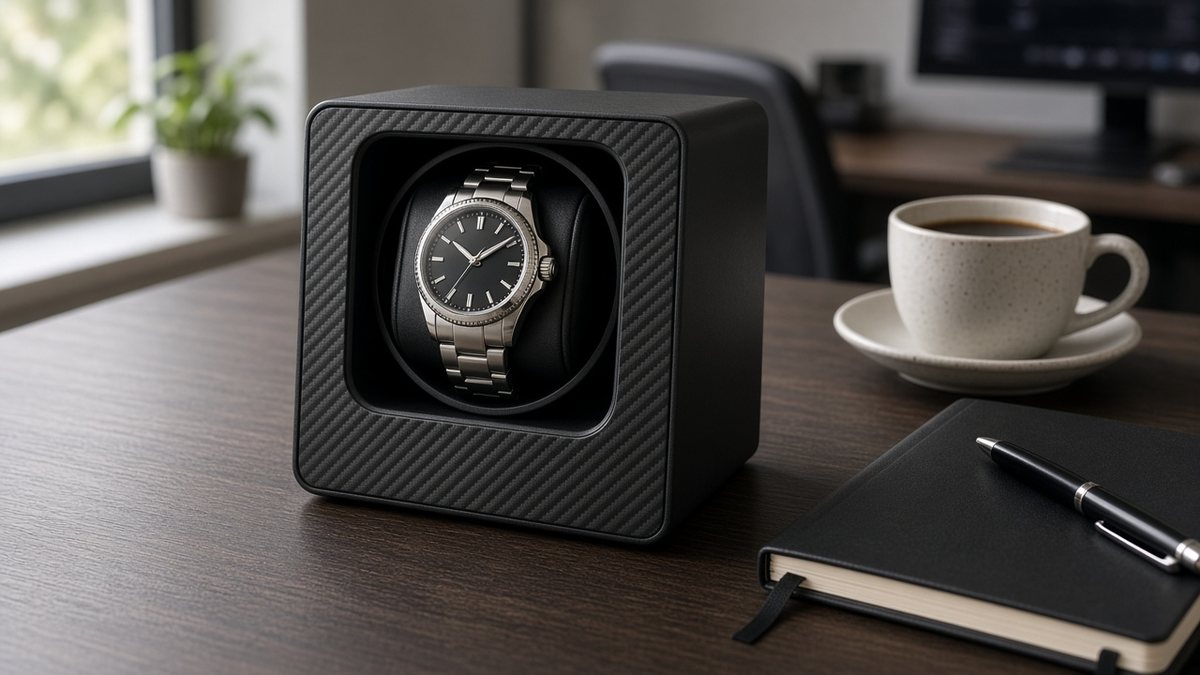
Stuff’s budget choice is made from PU leather with a clear acrylic window that keeps dust and knocks off while showing the watch. Inside is a quiet Japanese motor and a memory foam cushion that adapts to different wrist sizes, with USB-C power. It doesn’t have the polish of pricier models and isn’t fully silent, but Stuff says it’s hard to complain for the money.
Pros
- Very affordable
- Lots of colors
- USB-C
Cons
- Less luxurious materials
- Not fully silent
How to choose a watch winder
Count your watches honestly
Stuff suggests starting with how many watches you actually need to keep running. A single winder suits one or two automatics and a small shelf; two- and three-watch winders cover a typical rotation; six- and nine-watch cabinets are for collections. Buying one size up gives you room to grow, but a big cabinet with empty cuffs is wasted money and space.
Turns per day and direction matter most
Every automatic movement has a recommended number of turns per day and a winding direction (clockwise, counter-clockwise or both). The best winders let you set both, so you can match the watch and avoid winding it more than it needs. Stuff warns that a winder that spins too much or in the wrong direction can add wear over time, and that cheap motors and thin padding can jolt or scratch a watch. Check your watch maker’s guidance or the winder maker’s lookup tool; Stuff notes Barrington offers one.
Quiet, secure and covered
Noise is a common complaint, even on some expensive winders, according to Gear Patrol, and it matters if the winder lives in a bedroom. Look for a reputable motor (several of our picks use Japanese motors), a cuff or pillow that grips the watch without stressing the strap, and a lid, cover or glass door to keep dust off the crystal and case. Rest periods, where the winder pauses between cycles, are a sign of thoughtful programming.
Power and placement
Decide where the winder will live before you buy. Gear Patrol points out that many winders are bigger than you’d expect and some need to be plugged in. Battery-capable models (Barrington, Wolf, Orbita) can sit anywhere, though battery life varies widely, from about a week in Stuff’s Wolf Cub test to a couple of months on Barrington’s updated single. Travel winders like the Wolf Rocket use rechargeable batteries. If you keep several watches that don’t need winding, a lined watch box or roll keeps them protected: shop watch boxes on Amazon | shop watch rolls.
Know what a winder won’t do
Winders only work with automatic (self-winding) watches. Gear Patrol notes they do nothing for manual-wind or quartz watches. And a winder isn’t a substitute for regular servicing by a watchmaker.
FAQ
Do I really need a watch winder?
No. Both Stuff and Gear Patrol say a winder is a convenience rather than a necessity. It’s most useful if you own several automatic watches and don’t wear each one daily, or if you have complications like a moonphase or perpetual calendar that are tedious to reset.
Can a watch winder damage my watch?
A good winder used correctly shouldn’t harm a watch. Problems come from spinning too much or in the wrong direction, or from rough motors and poor padding. Set the turns per day and direction to suit your movement and choose a winder with rest periods.
How many turns per day does my watch need?
It depends on the movement. Many winders offer a range of settings, and the Barrington single’s updated model, for example, offers 650 to 1,950 TPD. Check your watch maker’s specs or a winder brand’s lookup tool.
Will a winder work with a quartz watch?
No. Winders only work on automatic watches that use a rotor to wind the mainspring. They won’t wind manual-wind or quartz watches.