
The Best Pizza Steels for 2026: Restaurant-Style Crust From Your Home Oven
By Claire Whitmore. Last updated October 2026.
Disclosure: some links on this page are affiliate links, including Amazon links. If you buy through them we may earn a commission at no extra cost to you. It doesn’t change what we recommend. Details are in our affiliate disclosure.
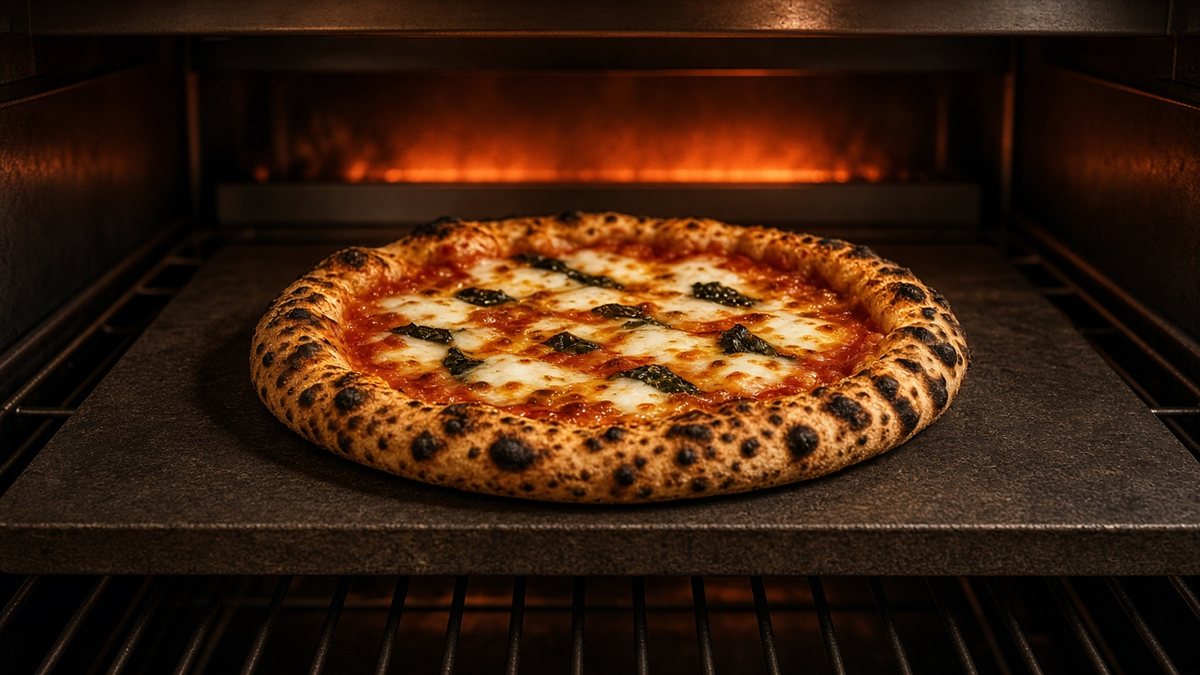
An outdoor pizza oven is the gold standard for blistered, leopard-spotted crust, but it costs hundreds of dollars and needs a patio. A pizza steel gets you remarkably close inside your existing oven for a fraction of the price. It’s simply a thick slab of steel that you preheat on an oven rack. Because steel conducts heat far better than ceramic, it pumps energy into the dough fast, giving you a crisp, browned bottom and big oven spring in minutes rather than the soggy-centered pies a sheet pan produces.
For this guide, we leaned on Serious Eats, which tested 10 pizza steels by measuring surface temperature with an infrared thermometer at three spots after 20, 30 and 60 minutes, baking pizzas and flatbreads, and comparing results against its favorite pizza stone. We cross-checked dimensions, weights, thickness and prices against manufacturer listings, and note where other outlets, including America’s Test Kitchen and Food Network, have weighed in, as cited by the maker. We didn’t test these steels ourselves.
Quick answer: buy the Original Baking Steel. It held the most even temperature in Serious Eats’ testing, and it arrives pre-seasoned. The ThermiChef is a strong alternative for about half the price, the Chef Pomodoro is the budget buy, and the Baking Steel Pro is the upgrade for full 16-inch New York-style pies.
Our picks at a glance
| Pick | Thickness / weight | Serious Eats heat result | Best for |
|---|---|---|---|
| Original Baking Steel | 1/4 in., 15 lb (maker) | Most even surface; ~500 °F center right after a bake | Most home cooks |
| ThermiChef Pizza Steel | 1/4 in. | 500 °F in 20 min; fast recovery | Value; back-to-back pies |
| Chef Pomodoro 16-inch | Thinner; 14 lb | 510 °F in 30 min | Budget (about $60 at testing) |
| Primica Pizza Steel XL | — | 528 °F in 20 min | Fastest preheat |
| Baking Steel Pro | 3/8 in., 16 x 16 in., 27 lb (maker) | ~529 °F after 1 hr | 16-inch NY-style pies |
Temperatures from Serious Eats’ tests in an oven set to 500 °F; weights and dimensions from manufacturer listings where noted.
Why steel beats stone
Serious Eats explains the physics well: carbon steel conducts heat at roughly 45 watts per meter-kelvin, versus about 15 for stainless steel and far less for ceramic or cordierite stone. That conductivity means a thick carbon steel both delivers heat into the crust faster and recovers faster after you slide a cold pizza onto it, the way a big pot of oil stays hot when you add food. In testing, thick carbon steel heated faster and held temperature better than thin or stainless models.
Steel is also virtually indestructible. Stones can crack from thermal shock or a dropped peel; a steel won’t. The trade-offs are weight and the fact that steel doesn’t absorb moisture from dough the way a porous stone does, so it’s less forgiving of very wet dough.
The best pizza steels
1. Original Baking Steel: best overall
Best for: nearly anyone who makes pizza or bread at home more than occasionally.
Most steels Serious Eats tested made far better pies than a bare oven, but the Original stood out on the finer points: after the pizza came off, it showed the smallest temperature swings and fewest hot spots across its surface, with the center still around 500 °F. Pizza had a crisp, airy crust and good spotting underneath. It didn’t get quite as hot as some rivals, which is the main critique.
Per the maker, it’s a 1/4-inch-thick, 15-pound slab of carbon steel, made and hand-seasoned with flax oil in Massachusetts and shipped ready to use, listed at $139. Baking Steel also notes that America’s Test Kitchen named it a co-winner and Food Network named it the best pizza steel, and that J. Kenji López-Alt first tested it for Serious Eats in 2012.
Pros
- Most even heat in testing
- Arrives pre-seasoned
- Made in the USA
- Manageable weight
Cons
- Not the hottest
- No corner handle holes
2. ThermiChef Pizza Steel: best value
Best for: cooks making several pizzas in a row who want to spend less.
The ThermiChef is a quarter-inch slab of carbon steel that reached 500 °F in 20 minutes and 504 °F in 30, and it was one of the fastest to recover between pies, which matters for pizza parties. Pies were done in about six minutes. Serious Eats prices it at roughly half the cost of the Baking Steel.
It was the second heaviest winner, but a hole in one corner makes it easier to pull off the rack once cool. Unlike the Baking Steel, you season it yourself: rub on a thin coat of oil and bake for an hour.
Pros
- About half the price of the Original
- Fast recovery
- Corner hole for lifting
Cons
- Heavy
- Requires seasoning
3. Chef Pomodoro 16-Inch Pre-Seasoned Pizza Steel: best budget
Best for: occasional pizza makers and anyone who wants a lighter steel.
At 14 pounds, it’s one of the lightest winners, yet it reached 510 °F in 30 minutes, and flatbreads puffed and browned evenly. It cost about $60 when Serious Eats tested it. Because it’s thinner, it swings in temperature more and needs a little extra recovery time between pies. Serious Eats’ rule of thumb: if you buy a thinner steel, choose one weighing at least 14 pounds.
Pros
- Inexpensive
- Lighter to handle
- Pre-seasoned
Cons
- More temperature swing
- Slower recovery
4. Primica Pizza Steel XL: fastest heating
Best for: impatient cooks and weeknight pizza.
The Primica hit 528 °F in just 20 minutes, the fastest preheat in testing. It dropped about 50 degrees when a pie went on but climbed back quickly, so back-to-back bakes were easy. It fluctuates more than the Baking Steel Pro, but costs about a third as much.
Pros
- Fastest preheat
- Large surface
- Good value
Cons
- Bigger temperature swings than the Pro
5. Baking Steel Pro: best upgrade
Best for: serious pizza makers who want full-size New York pies.
With more thermal mass, the Pro got hotter than the Original, averaging about 529 °F after an hour, and produced huge oven spring, fluffy bubbles and leopard spotting that Serious Eats compared to a wood- or coal-fired oven. The maker lists it at 16 by 16 inches and 3/8-inch thick, 50% thicker than the Original, weighing 27 pounds, for $189. It recommends a 60- to 75-minute preheat at 500 to 550 °F for pies that bake in 5 to 7 minutes.
It’s pricier, heavier and bulkier. Measure your oven first; a 16-inch-square slab won’t fit every range, and 27 pounds is a lot to lift onto a rack.
Pros
- Most heat and oven spring
- Fits 16-inch pies
- Pre-seasoned, made in the USA
Cons
- 27 pounds
- Needs a large oven
- Long preheat

Steels that fell short
In Serious Eats’ testing, the Ooni Pizza Steel 13 had the lowest center temperature after a bake, suggesting slow recovery. The VEVOR developed hot spots that charred crusts, the Steelmade needed a full hour and still couldn’t match the pizza-stone control, and the NerdChef absorbed heat the slowest with wild hot spots afterward.
Pizza steel vs. outdoor pizza oven
A home oven tops out around 500 to 550 °F, so even the best steel bakes a pie in about 5 to 7 minutes. A gas or wood-fired outdoor oven runs far hotter and cooks Neapolitan pizza in about a minute. If you want true Neapolitan char, look at our best outdoor pizza ovens and Ooni vs. Gozney comparison. For New York-style, Detroit-style, flatbreads and bread, a steel is the smarter, cheaper, year-round tool, and it doubles as a heat sink that steadies an uneven oven, according to Serious Eats.
How to choose
- Material: choose carbon steel over stainless for conductivity and durability.
- Thickness: 1/4 inch is the sweet spot; 3/8 inch adds heat and weight.
- Weight: at least 14 pounds for thinner steels; anything over 20 pounds needs a careful lift.
- Size: measure your oven rack and door, leaving room for air to circulate.
- Seasoning: pre-seasoned is convenient; self-seasoning takes about an hour.
Tips for better pizza on a steel
- Put the steel on the top or upper-middle rack and preheat at your oven’s maximum for at least 45 to 60 minutes.
- Switching to the broiler for the last minute or two browns the top while the steel crisps the bottom.
- Launch with a floured or semolina-dusted peel; a wooden peel releases raw dough more easily, a metal peel retrieves finished pies.
- Don’t move the steel until the oven has fully cooled, which manufacturers universally advise.
- Use it for more than pizza: boules, roasted vegetables and oven fries all brown better on a steel.
Cleaning and care
Pizza steels barely need cleaning. Burn off spills in the hot oven and brush away crumbs. If needed, scrub with hot water and a little soap, dry thoroughly and wipe on a thin film of oil. Spots, stains and darkening patina are normal and harmless.
FAQ
Pizza steel or pizza stone?
Steel heats and recovers faster, won’t crack, and gives a crisper bottom in a home oven. A stone is lighter and absorbs dough moisture, which can help with very wet doughs.
How long should I preheat a pizza steel?
Serious Eats found good steels near peak temperature in 20 to 30 minutes, but a full hour gives the most stable heat; Baking Steel recommends 60 to 75 minutes for the Pro.
Can I use a pizza steel on a grill?
Many makers allow it, but check your model’s instructions.
Is a pizza steel worth it if I rarely make pizza?
Serious Eats thinks so, because the steel stabilizes oven temperature for baking and roasting too.
The bottom line
The Original Baking Steel is the one to buy: even heat, ready to use, and manageable at 15 pounds. Save with the ThermiChef or Chef Pomodoro, or go big with the 27-pound Baking Steel Pro if your oven can take it.


