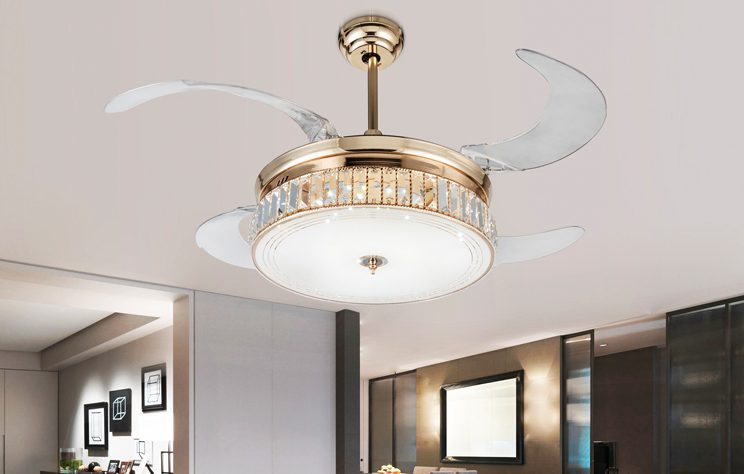
Luxury Ceiling Fans: Best Styles, Brands and Buying Guide (2026)
By Claire Whitmore. Last updated October 2026.
Disclosure: LifetimeLuxury may earn a commission when you buy through links on this page, at no extra cost to you. As an Amazon Associate we earn from qualifying purchases. See our affiliate disclosure.
Ceiling fans used to be the thing designers hid. Today the best ones are as considered as any light fixture: slim DC motors, sculpted wood or carbon-fiber blades, and app or voice control. A good fan also earns its keep, because it lets you feel cooler at a higher thermostat setting. Below are the main styles, the brands that do them well and the sizing and installation rules that make a fan work in your room.
Modern luxury ceiling fans

Modern fans favor minimal motor housings, matte finishes and integrated LED lights. They suit open-plan living rooms and bedrooms where you want air movement without a visual focal point.

Classic luxury ceiling fans

Classic fans, with wood blades, decorative motor housings and often a schoolhouse glass light, still suit traditional homes, porches and colonial or craftsman architecture.

The propeller-blade style

Two- and three-blade propeller fans read almost like aircraft or sculpture. They are especially striking in rooms with high or vaulted ceilings.

Luxury ceiling fan brands to know
| Brand | Known for | Shop |
|---|---|---|
| Big Ass Fans (Haiku) | Premium residential fans with SenseMe smart features and very quiet motors | Sold direct and through retailers |
| Minka-Aire | Design-led modern fans such as the Light Wave and Xtreme lines | Minka-Aire |
| Modern Fan Co. | Architectural, minimalist designs | Through lighting showrooms |
| Fanimation | Wide range from tropical to industrial, many outdoor-rated models | Fanimation |
| Casablanca | Long-running premium brand, classic and modern | Casablanca |
| Hunter | Mainstream brand with premium lines | Hunter |
Buying guide
Size the blade span to the room
| Room size | Typical blade span |
|---|---|
| Up to about 75 sq ft | 29 to 36 inches |
| 76 to 144 sq ft | 36 to 42 inches |
| 144 to 225 sq ft | 44 to 50 inches |
| 225 to 400 sq ft | 50 to 54 inches or larger |
| Over 400 sq ft | 60 inches plus, or two fans |
These ranges follow common industry guidance; check the manufacturer’s recommendation for each model, as blade pitch and motor power also matter.
Mount at the right height
Building codes commonly require fan blades to be at least 7 feet above the floor, and many manufacturers recommend 8 to 9 feet for the best airflow. On high or vaulted ceilings, use a downrod (and a sloped-ceiling adapter if needed) to bring the fan down into the living space. Keep blades at least 18 inches from walls.
Choose a DC motor if you can
DC motors are generally quieter, lighter and more energy efficient than traditional AC motors, and they usually offer more speed settings and a reverse function from the remote. They cost more upfront. Look at the airflow efficiency (CFM per watt) on the label and for ENERGY STAR certification.
Check the damp or wet rating
- Dry-rated: indoor rooms only.
- Damp-rated: covered porches and bathrooms, protected from direct rain.
- Wet-rated: exposed outdoor areas, pergolas and spots that get rain directly.
Lighting and controls
An integrated LED light kit can replace a ceiling light, but check brightness (lumens), color temperature and dimming. Smart fans can link to thermostats or voice assistants; otherwise a wall control is more reliable than a hand remote that gets lost.
Pros and cons by style
Modern minimal
Pros: disappears visually, usually DC and quiet
Cons: can look cold in traditional rooms
Classic wood-blade
Pros: warm, traditional
Cons: bulkier motor housings
Propeller / two-blade
Pros: sculptural, dramatic
Cons: some move less air than more blades at the same size
Outdoor wet-rated
Pros: handles porches and pergolas
Cons: fewer finish options
Use your fan efficiently
Fans cool people, not rooms, so switch them off when you leave. In summer, run the fan counterclockwise (viewed from below) to push air down. In winter, a slow clockwise setting gently pushes warm air from the ceiling back down without creating a draft. The U.S. Department of Energy notes that a ceiling fan can let you raise the thermostat about 4 degrees F with no reduction in comfort.
Choosing a fan room by room
Living room and great room
Large rooms often need a 52- to 60-inch fan or two smaller fans spaced evenly. In open-plan spaces, place fans over the seating areas rather than the geometric center of the room, because the goal is to move air over people. Vaulted ceilings need a longer downrod so the blades sit in the 8- to 9-foot zone.
Bedroom
Quiet is the priority. DC-motor fans with many low speeds let you run a gentle breeze all night. A fan without a light can be paired with bedside lamps for a calmer look. Hot sleepers can combine a fan with a cooling mattress and linen sheets.
Kitchen
Fans over kitchens should not sit directly above a gas cooktop, where moving air can disturb flames and pull grease into the blades. Choose a fan with easy-to-clean blades and a sealed motor housing.
Covered porches and outdoor rooms
Use damp-rated fans under a solid roof and wet-rated fans on pergolas or open structures. Outdoor fans are built with sealed motors and weather-resistant blades and finishes. A fan also helps keep mosquitoes away from a seating area, since they are weak fliers. Pair them with outdoor sofas for a real outdoor living room.
Home office and gym
Small rooms with electronics generate heat; a 44- to 52-inch fan keeps them comfortable. In a home gym, choose a fan with strong high-speed airflow and a sturdy mount.
Smart features worth paying for
- App and voice control through Google Home, Amazon Alexa or Apple Home (check which platforms each model supports).
- Occupancy and temperature sensing, as in Big Ass Fans’ SenseMe technology, which can adjust speed automatically.
- Sleep and schedule modes that slow the fan or dim the light overnight.
- Reverse from the remote on DC fans, so you can switch summer and winter modes without a ladder.
Common ceiling fan mistakes
- Too small a fan for the room, so it runs on high and is noisy.
- Mounting too close to the ceiling (a hugger fan on a 9-foot ceiling), which starves the blades of air.
- Using an indoor fan outdoors, where moisture can damage motors and blades.
- Skipping a fan-rated box. Fans need an outlet box listed for fan support, because of their weight and vibration. Ordinary light boxes are not enough.
- Ignoring blade-to-wall clearance, which reduces airflow and can cause wobble.
Installation and maintenance
Fan installation involves heavy, moving equipment overhead. Many homeowners hire a licensed electrician, especially when a new circuit, switch leg or fan-rated box is needed. To keep a fan quiet, tighten blade screws once or twice a year, use the balancing kit supplied with most fans if it wobbles, and dust the blades regularly, since dust buildup adds noise and throws dust into the room. A pillowcase slipped over each blade makes a tidy cleaning tool.
Accessories: balancing kits, extendable fan dusters and replacement downrods.
Step-by-step: choosing your fan
- Measure the room’s square footage and pick a blade span from the sizing table above.
- Measure floor-to-ceiling height to decide between flush mount and a downrod, and which downrod length.
- Decide whether you need a light kit, or whether the room already has enough lighting.
- Check the location rating needed: dry, damp or wet.
- Compare airflow (CFM), energy use (watts) and efficiency (CFM per watt) on the label.
- Choose controls: wall control, remote, or a smart fan with app and voice support.
- Confirm the electrical box is fan-rated and plan installation.
Where to splurge and where to save
Splurge on the fans you look at and listen to most: the living room, where a fan is a visible design element, and the primary bedroom, where motor noise matters at night. A premium DC fan from a brand such as Big Ass Fans, Minka-Aire or Modern Fan Co. typically earns its price in quietness, smoother speed control and better finishes. Save in secondary bedrooms, laundry rooms and garages, where a well-reviewed mid-range fan with an ENERGY STAR rating does the job. Outdoors, put the money into a genuinely wet-rated model rather than a cheaper indoor fan that will fail in humidity.
Also budget for installation. A new fan-rated box, a wall control or an extra switch leg can add an electrician’s visit, and long downrods or sloped-ceiling adapters are often sold separately. Asking for these items when you buy the fan avoids a second trip and a fan sitting in its box.
The bottom line
The best luxury ceiling fan is the one sized correctly for the room, mounted at the right height and quiet enough that you forget it is there. Start with the sizing table, choose a DC motor where you can, match the finish to your other fixtures, and let style lead only once those boxes are ticked.
FAQ
What size ceiling fan do I need?
Match blade span to room size: roughly 36 to 42 inches for a typical bedroom up to 144 sq ft, and 50 to 54 inches or larger for living rooms up to 400 sq ft.
Are DC ceiling fans worth it?
Usually, yes. They are typically quieter and more efficient, with more speeds, though they cost more upfront.
How far should a ceiling fan be from the ceiling?
Blades should sit at least 7 feet above the floor; 8 to 9 feet is ideal. Use a downrod on higher ceilings.
Can I put a ceiling fan in a bathroom?
Only a damp-rated (or wet-rated) fan, and follow local electrical codes for placement near tubs and showers.
How many blades are best on a ceiling fan?
The number of blades matters less than motor power, blade pitch and design. Two-, three-, four- and five-blade fans can all be effective; compare CFM ratings.
Why is my ceiling fan noisy?
Common causes are loose blade screws, an unbalanced blade, dust buildup or a worn mounting bracket. Tighten, clean and use a balancing kit; if a hum persists with a wall dimmer, the fan may need a fan-rated speed control rather than a light dimmer.
Do ceiling fans save energy?
They use far less energy than air conditioning. Raising the thermostat a few degrees while running fans in occupied rooms can reduce cooling costs, but fans do not lower room temperature, so turn them off in empty rooms.
Can I put a ceiling fan on a sloped ceiling?
Yes, with a sloped-ceiling adapter and a long enough downrod so the blades clear the ceiling. Check the maximum slope the fan is rated for.
Related guides
- The Best Smart Chandeliers
- 25 Luxury Kitchen Lighting Ideas
- The Best Cooling Mattresses
- 16 Inspiring Luxury Patio Ideas
- The Best Outdoor Sofas
How we research: we compare manufacturer specifications, published installation guidelines and independent reviews. We have not personally tested every product here, and prices and availability change often, so check with the retailer or showroom before you buy.