The Best Cutting Boards for 2026: End-Grain Maple and Plastic Picks
By Claire Whitmore. Last updated October 2026.
Disclosure: some links on this page are affiliate links, including Amazon links. If you buy through them we may earn a commission at no extra cost to you. It doesn’t change what we recommend. Details are in our affiliate disclosure.
A great cutting board makes every prep job more pleasant. A good wood board is gentler on knife edges, quieter, and handsome enough to leave out on the counter, while a good plastic board is light, cheap and dishwasher-safe. Most kitchens should have one of each: one for produce and cooked food and one for raw meat, poultry and seafood.
Our picks are based on Wirecutter’s cutting board guide, updated in March 2026. Its writer has tested more than 40 boards since 2015 and interviewed woodworkers, board makers, a forestry professor, a materials scientist and a toxicologist. Testers measured boards against standard sinks and dishwashers, left beet juice and garlic on them for 30 minutes to check stains and odors, and used the best ones at home for weeks. We haven’t tested these boards ourselves, and prices change often.
Quick answer: the Jones Cutting Boards 20 x 14 x 1.5-inch Maple End Grain board is the wood board to buy. Choose The Boardsmith Maple End Grain Butcher board for a thicker board with sturdier feet, the Ironwood Gourmet Charleston for a smaller board under $70, and the OXO Good Grips Carving and Cutting Board for plastic.
Our picks at a glance
| Pick | Material | Size | Warranty | Approx. price* |
|---|---|---|---|---|
| Jones Maple End Grain | Domestic end-grain maple | 20 x 14 x 1.5 in. | 1 year | About $185 with feet |
| The Boardsmith Butcher | FSC-certified end-grain maple | 18 x 12 x 2 in. | 60 days | More than the Jones |
| Ironwood Gourmet Charleston | End-grain acacia | 14 x 14 x 1.25 in. | 30-day replacement | About $57 |
| OXO Good Grips Carving and Cutting Board | Polypropylene | About 14 x 21 in. | Varies | Inexpensive |
| Tenryo Hi-Soft | Polyvinyl acetate | 15.8 x 11.5 in. | Varies | About $55 |
*Prices from Wirecutter at the time of writing. Jones boards are made to order; Wirecutter noted a 90-day lead time in March 2026 because of high demand.
The best cutting boards
1. Jones Cutting Boards Maple End Grain (20 x 14 x 1.5 in.): best wood board
Best for: serious home cooks who will oil and wax a board in exchange for decades of use.
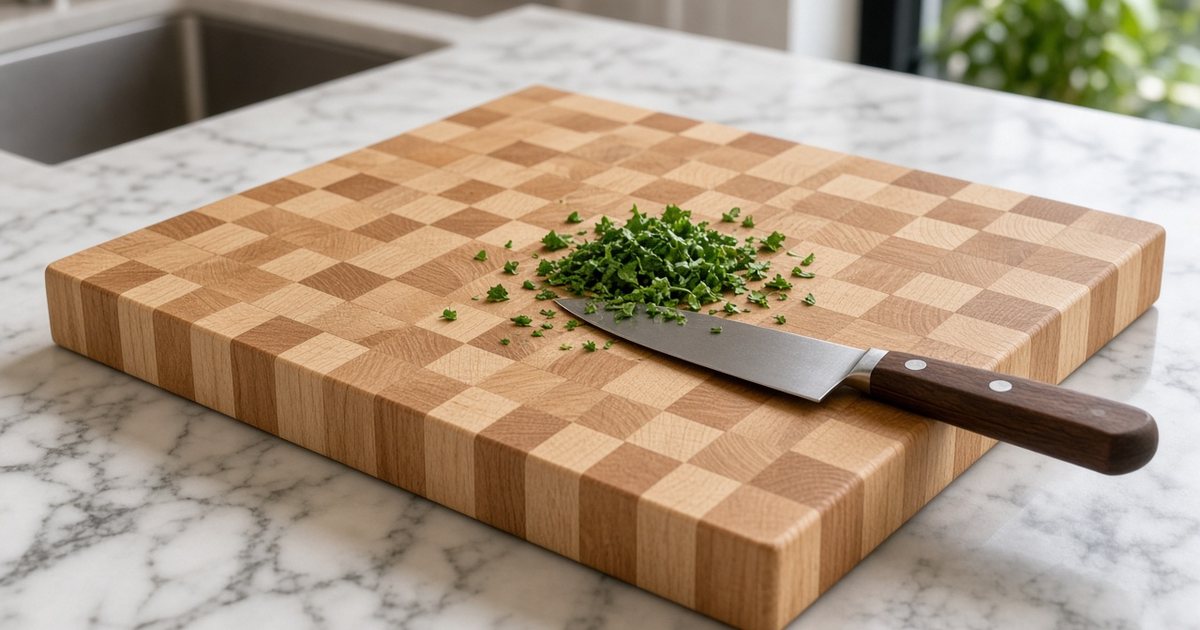
Handmade by a family company in rural Pennsylvania, the Jones board stained less than other wood boards in testing, its knife marks self-healed, and it was one of the few that didn’t warp. It arrived well-oiled and wrapped in plastic, and even its optional juice and handle grooves are finely sanded.
It has finger grooves, and you can add feet (about $10, recommended to prevent warping), a juice groove or engraving. The 20 x 14-inch size weighs 9.9 pounds; a 12 x 16-inch version is lighter. Its one-year warranty is the longest among Wirecutter’s wood picks. Because each board is made to order, delivery can take from two weeks to a few months.
Pros
- Beautiful craftsmanship
- Resists stains; self-heals
- Customizable
- Fair price for the quality
Cons
- Long wait times
- Needs regular oiling and waxing
- Feet less sturdy than the Boardsmith’s
2. The Boardsmith Maple End Grain Butcher Cutting Board: upgrade pick
Best for: taller cooks and anyone who wants a heftier heirloom board.
Made in Frisco, Texas, from FSC-certified maple, the Boardsmith board is half an inch thicker than the Jones and includes durable polyurethane feet set in wooden escutcheons. It’s the only board Wirecutter tested that offers a juice groove on the underside, so the top stays flat for everyday chopping and you flip it for carving.
The 18 x 12 x 2-inch size weighs 11 pounds; larger and smaller sizes are available. With feet it stands 2.75 inches tall, which shorter cooks may find too high. A larger footless version warped in testing but flattened after oiling. Expect a two- to three-week wait.
Pros
- Thicker and sturdier
- Feet included
- Underside juice groove option
Cons
- Pricier
- Tall with feet
- 60-day warranty
3. Ironwood Gourmet 28218 Square Charleston End Grain Chef’s Board: budget wood board
Best for: small kitchens, cheese and charcuterie, or a second board for raw proteins.
The best wood board Wirecutter tested under $70, this 14 x 14-inch acacia board ships quickly and its darker wood hides stains. It isn’t as finely finished as the maple boards, it’s thinner, it lacks grooves and real feet, and acacia can be harder on knife edges. It has no third-party sustainability certification and only a 30-day replacement policy.
Pros
- Affordable
- Ships fast
- Hides stains
Cons
- Rough patches
- No feet, more prone to warping
- Harder on knives
4. OXO Good Grips Carving and Cutting Board: best plastic board
Best for: raw meat, big carving jobs and anyone who wants a low-maintenance board.
At about 14 x 21 inches, the OXO is big enough to carve a 12-pound turkey, and its juice groove holds about half a cup of liquid. It resisted warping, stains and odors better than other plastic boards, and its rubbery edges keep it in place. Smaller sizes, including a roughly 10 x 15-inch utility board that fits most dishwashers, are also available.
It’s harder and slicker under a knife than wood or the Tenryo, louder to chop on, and the center can flex, so put a towel underneath. Avoid serrated knives on it, and replace plastic boards about every two years.
Pros
- Large and light
- Great juice groove
- Resists stains and odors
Cons
- Harder on knives
- Can flex
- Noisy
5. Tenryo Hi-Soft Cutting Board: best plastic board for knife edges
Best for: owners of fine knives who still want a plastic board.
Made of softer polyvinyl acetate, the Tenryo was the best-feeling and quietest plastic board Wirecutter tested, and it self-heals better than the OXO. It costs about $55 for the 15.8 x 11.5-inch size, lacks a juice groove, and is dishwasher-safe only up to 158 °F, so keep it away from heat.
Pros
- Gentle on knives
- Quiet
- Stays put
Cons
- Pricey for plastic
- No juice groove
- Heat-sensitive

Wood or plastic?
Wood is easier on knife edges, its cut marks close up over time, it can be sanded and last for decades, and thick boards are quieter. But it must be hand-washed and oiled and waxed often, and it’s heavier and pricier. Plastic is cheap, light and dishwasher-safe, but it dulls knives faster, shows scratches, and should be replaced about every two years because bacteria can hide in deep cuts.
It’s a myth that only plastic is suitable for raw meat. The USDA says either material can be used, and many woods have antimicrobial properties. Wirecutter disagrees with the USDA’s advice to bleach or dishwasher-wash wood; a good scrub with hot soapy water is enough. Wirecutter avoids bamboo and composite boards because they’re very hard on knives.
On microplastics, a Michigan State University toxicologist told Wirecutter that the effects of dietary microplastics remain unclear. Using wood for most prep and plastic for raw proteins keeps any risk low.
What to look for
- Size: about 20 x 14 inches suits most cooks; make sure it fits your counter and sink.
- Thickness: wood boards of 1.5 to 2.25 inches resist warping; plastic at least half an inch thick.
- End grain: gentler on knives and self-healing, though it needs more frequent oiling.
- Domestic hardwood: experts recommend maple, walnut or cherry from the US for stricter forestry standards.
- Feet and grooves: feet lift the board off a damp counter and help prevent warping.
FAQ
How often should I oil a wood board?
Whenever it looks dry, and more often when it’s new. Oil and wax regularly to prevent cracking and warping.
Can a wood board go in the dishwasher?
No. Hand-wash it and dry it standing up.
When should I replace a plastic board?
About every two years with frequent use, or sooner if it’s deeply scored.
What knife should I pair with a good board?
See our guide to the best chef’s knives.
The bottom line
For wood, the Jones end-grain maple board is the one to get if you can wait for it; the Boardsmith is a thicker upgrade and the Ironwood a sensible budget choice. For plastic, the OXO Good Grips Carving and Cutting Board is the best all-rounder, and the Tenryo Hi-Soft is kinder to fine knives.