The Best Chef’s Knives for 2026: Mac, Tojiro, Wüsthof and Victorinox
By Claire Whitmore. Last updated October 2026.
Disclosure: some links on this page are affiliate links, including Amazon links. If you buy through them we may earn a commission at no extra cost to you. It doesn’t change what we recommend. Details are in our affiliate disclosure.
If you buy one great kitchen tool, make it a chef’s knife. A sharp, comfortable 8-inch knife does most of the cutting in a home kitchen, and because a sharp blade is less likely to slip, it’s safer than the dull one in the drawer. You don’t need a full block set to cook well; one excellent knife and a honing rod will carry you a long way.
Our picks are based on Wirecutter’s September 2026 update to its chef’s knife guide, written by a former restaurant cook and Martha Stewart food editor. Its team has spent more than 200 hours since 2013 comparing more than 100 knives, chopping over 70 pounds of produce with 23 finalists, with help from New York Times Cooking’s Sam Sifton and the cooks at New York’s Le Coucou. We haven’t tested these knives ourselves, and prices change often.
Quick answer: the Mac MTH-80 is the chef’s knife we’d buy for most cooks. Choose the Tojiro F-808 for a sharp Japanese gyuto at a lower price, the Wüsthof Classic Ikon 8-inch if you prefer a heavier German knife, and the Victorinox Swiss Classic 8-inch if you want the best knife around $60.

Our picks at a glance
| Pick | Style | Best for | Warranty | Approx. price* |
|---|---|---|---|---|
| Mac MTH-80 | Japanese-German hybrid | Best overall | 25 years (authorized sellers) | About $145 to $160 |
| Tojiro F-808 | Japanese gyuto | Precision on a budget | Varies by retailer | About $100 to $140 |
| Wüsthof Classic Ikon 8-inch | German | Heavier, rocking cuts | Limited lifetime | Varies |
| Victorinox Swiss Classic 8-inch | Western, stamped | Budget, beginners | Limited lifetime | About $60 |
*Prices from Wirecutter’s buying links at the time of writing.
The best chef’s knives
1. Mac MTH-80: best overall
Best for: nearly everyone, whether they rock the blade or push and pull it.
The MTH-80 has been Wirecutter’s pick since 2012. Its blade shape splits the difference between curved German knives and flat Japanese gyutos, so it suits both cutting styles. It made clean cuts through fibrous carrots, left sliced basil green rather than bruised, and was one of the few knives that cut straight through the center of a butternut squash.
Its very hard steel holds an edge longer than softer German blades, yet it’s less brittle than many gyutos, so it’s less likely to chip. Testers across skill levels, including Sam Sifton, named it their favorite, and Le Coucou’s sous chef called it the best overall for mise en place. The dimples on the blade help food release only a little.
Two cautions. Because of its high carbon content, it can spot if you don’t rinse and dry it after cutting acidic foods. And counterfeits circulate on Amazon: Mac’s 25-year warranty is void if you buy from an unauthorized seller, so check Mac’s list of authorized dealers before you buy.
Pros
- Razor-sharp, long-lasting edge
- Comfortable for most hand sizes
- Works for rocking or push-pull
- 25-year warranty
Cons
- Can stain if not dried
- Counterfeits sold online
- Handle may be small for very large hands
2. Tojiro F-808: best Japanese gyuto for the money
Best for: cooks who use a push-pull motion and want scalpel-like precision.
The F-808 is one of the best values in Japanese cutlery. Its thin, flat-bellied blade slices vegetables, herbs and boneless meat with exceptional precision, and its hard steel core holds an edge remarkably well. A Wirecutter writer has used one at home since 2017 with minimal sharpening.
It needs more care. The harder core is more brittle, and Wirecutter found a tiny nick after cutting butternut squash; Tojiro advises against hard and frozen foods. The flat edge makes rocking awkward, and knuckle clearance is tight for large hands. Tojiro doesn’t warranty knives sold outside Japan, but Wirecutter confirmed retailer Cutlery and More honors a lifetime warranty.
Pros
- Extremely sharp and precise
- Excellent edge retention
- Great value
Cons
- More brittle; avoid hard or frozen foods
- Less knuckle clearance
- Warranty depends on retailer
3. Wüsthof Classic Ikon 8-inch: best German-style knife
Best for: cooks who like heft and a rocking chop, and heavy jobs like splitting chicken.
If you’re used to a forged German knife, the Classic Ikon is the one to get. Its thinner blade cut more smoothly than other German knives tested and maneuvered easily around squash skin and citrus rinds. Its rounded handle is larger than the Mac’s, and testers with big hands liked the knuckle clearance.
Its softer stainless steel is more forgiving: it shouldn’t chip, stain or corrode if it gets dropped in the sink or left with acidic food. The trade-off is that it dulls faster and needs more frequent sharpening. It carries a lifetime limited warranty against manufacturing defects. It’s also the chef’s knife in Wüsthof’s six-piece Classic Ikon set, if you want a full set; see our luxury knife set guide.
Pros
- Sturdy and durable
- Comfortable large handle
- Stain- and chip-resistant
Cons
- Needs sharpening more often
- Thicker blade split carrots slightly
- Bruised basil more than Japanese blades
4. Victorinox Swiss Classic 8-inch: best budget chef’s knife
Best for: first kitchens, beginners and anyone who wants a tough knife around $60.
The Swiss Classic is the best knife Wirecutter has found at its price. Its gently curved edge works for any cutting style, its wide blade scoops food off the board, and its rounded spine doesn’t dig into your finger. It halved a butternut squash and diced onions with ease, though its factory edge isn’t as keen as the Mac’s or Tojiro’s.
Its ergonomic plastic handle is a little polarizing for pinch grips but comfortable if you hold the handle farther back. It will take more abuse than the pricier picks, but you’ll need to hone it often and may want a home sharpener. It has a limited lifetime warranty.
Pros
- Great value
- Durable
- Comfortable for most grips
Cons
- Less sharp out of the box
- Needs more frequent honing
German or Japanese?
German knives, popularized by Wüsthof and Zwilling J.A. Henckels, have a pronounced curve for rocking, and thicker, heavier blades for tough jobs. Japanese gyutos are thinner, harder and flatter, with very acute edges that excel at push-pull slicing and paper-thin cuts. Hybrids like the Mac MTH-80 split the difference. The best way to choose is to hold several knives, ideally in a store where you can cut something, and check that your knuckles clear the board.
What to look for
- Sharpness and edge retention: a new knife should slice paper easily and stay sharp for six to 12 months of moderate use with regular honing.
- Length: 8 inches suits most home cooks.
- Bolster: a half bolster or none makes sharpening easier; full bolsters need professional grinding over time.
- Balance and comfort: mostly personal preference, which is why handling knives in person helps.
- Authorized sellers: buy premium knives from authorized dealers to avoid fakes and keep your warranty.
Care, honing and sharpening
Hand-wash and dry your knife after every use. Never put it in the dishwasher or toss it loose in a drawer; use a magnetic strip or a blade guard. Cut only on wood, plastic or rubber boards, never glass, granite, marble or ceramic plates, which dull the edge instantly.
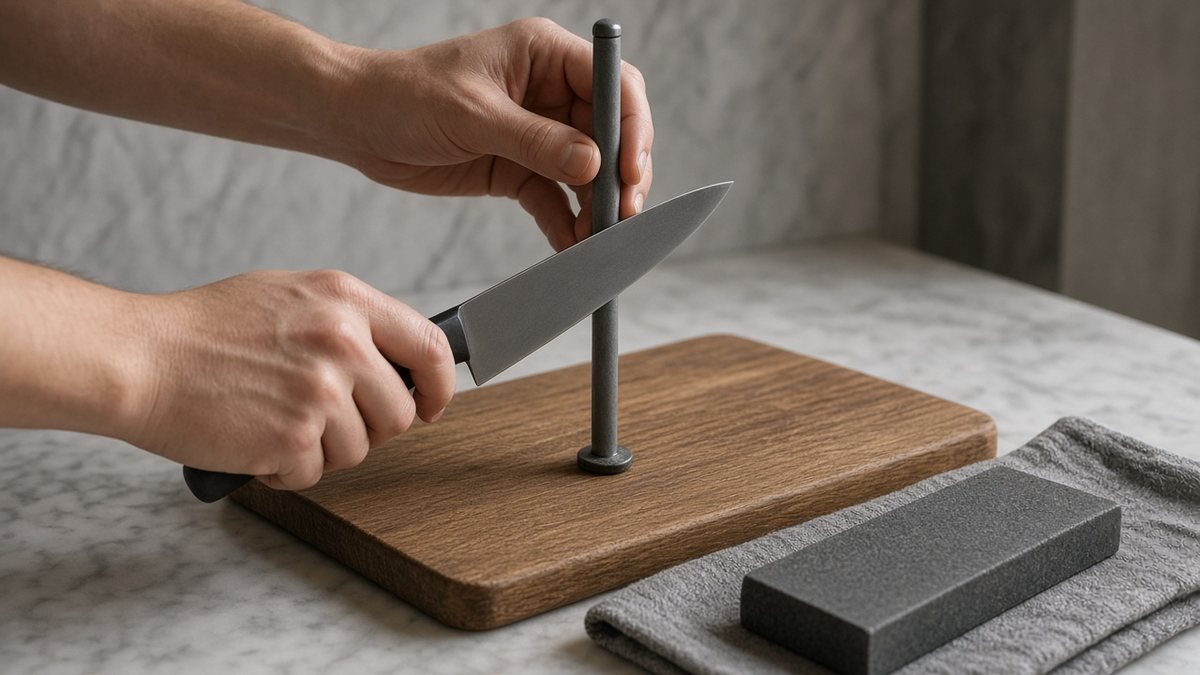
Hone before each use with a ceramic rod to realign the edge. Beginners can rest the rod’s tip on a cutting board and draw the blade down from heel to tip, four or five strokes per side. Actual sharpening is needed every six months to a year. A whetstone gives the best edge with practice, a good home sharpener works well for German and budget knives, and if you send knives out, ask a local chef where they send their own.
FAQ
Is an expensive chef’s knife worth it?
A knife like the Mac MTH-80 stays sharp longer, feels better in hand and can last a lifetime with care, which makes it good value. The Victorinox proves you can still get a very good knife for about $60.
How do I avoid counterfeit Mac knives?
Buy directly from Mac or a seller on Mac’s authorized list. A Wirecutter staffer received a fake in 2024; Mac’s customer service helped identify it and get a refund.
How often should I sharpen?
Hone every time you cook and sharpen every six months to a year, or when the knife starts to struggle with tomato or cucumber skins.
Can I put a good knife in the dishwasher?
No. Banging against dishes damages the edge, and harsh detergents and heat aren’t good for handles or steel.
The bottom line
The Mac MTH-80 is the chef’s knife we’d buy: sharp, agile, comfortable and long-lasting, as long as you buy it from an authorized seller. Choose the Tojiro F-808 for precision on a budget, the Wüsthof Classic Ikon for German heft, and the Victorinox Swiss Classic for the best knife around $60.