The Best Indoor Herb Gardens for 2026: Click & Grow, AeroGarden, Lettuce Grow and More
By Claire Whitmore. Last updated October 2026.
Disclosure: some links on this page are affiliate links, including Amazon links. If you buy through them we may earn a commission at no extra cost to you. It doesn’t change what we recommend. Details are in our affiliate disclosure.
Fresh basil in January, without buying another plastic clamshell you’ll use half of: that’s the promise of an indoor herb garden. Today’s smart gardens combine seed pods, a water reservoir and LED grow lights on a timer, so they work on any counter, no sunny window required. They’re also one of the best holiday gifts for home cooks, because they keep giving all winter.
This guide draws on three hands-on tests. Serious Eats contributor Irvin Lin set up each garden by the instructions, planted Genovese basil in every unit, tracked germination and growth, and cleaned each one after a full grow cycle. Food & Wine planted basil in every model, kept temperature and humidity consistent, measured plants at three and six weeks and ran a six-month long-term test. CNET editors grew herbs and greens in several systems at home. We didn’t test these gardens ourselves.
Quick answer: the Click & Grow Smart Garden 3 is Food & Wine’s best overall and CNET’s best for most people, and Serious Eats’ best small garden. Serious Eats’ overall favorite is the six-pod AeroGarden Harvest Elite. For grow-your-own seeds, Serious Eats likes the iDOO 12-pod kit, and for a pretty trio of glass planters, Lettuce Grow’s Counterstand Set.
Our picks at a glance
| Garden | Capacity | Type | Who recommends it | Best for |
|---|---|---|---|---|
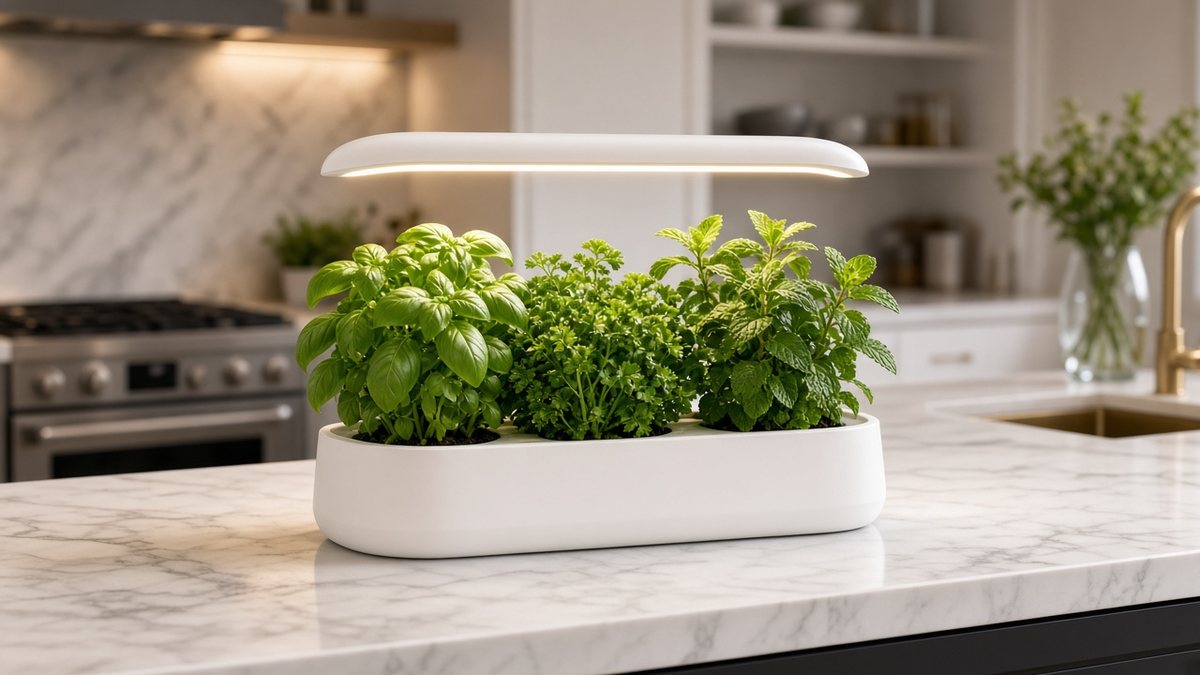
| Click & Grow Smart Garden 3 | 3 pods | Self-watering smart pods | F&W best overall; CNET best for most; SE best small | Beginners |
| AeroGarden Harvest Elite | 6 pods | Hydroponic | SE best overall | Variety of herbs |
| AeroGarden Sprout | 3 pods | Hydroponic | SE best $50 option; F&W best for small spaces | Tiny kitchens |
| iDOO 12 Pods Kit | 12 pods | Hydroponic, your own seeds | SE runner-up | Growing anything |
| EDN SmallGarden | 10 basil pods included | Pre-seeded pods, iOS app | SE best for beginners | Design lovers |
| Lettuce Grow Counterstand Set | 3 planters | Pre-germinated seedlings | F&W; CNET Editors’ Choice | Gifting, style |
| Rise Gardens Personal Garden | 8 pods | Hydroponic, Wi-Fi app | F&W best for fruits and vegetables | Produce |
| Gardyn Studio 2 | 16 pods | Vertical hydroponic | CNET best low-maintenance | More greens |
| Smart Growhouse | Planter with timed LEDs | Grow light, no self-watering | CNET most stylish | Decor |
Capacities and features as reported by Serious Eats, Food & Wine, CNET or the makers. Pod and seedling refills are sold separately.
How we chose
We chose based on the three tests above, giving the most weight to the Click & Grow Smart Garden 3, which all three outlets recommend, and to Serious Eats’ favorite AeroGarden. We compared capacity, how plants are started (pre-seeded pods, your own seeds or live seedlings), light height and adjustability, how often you need to add water or nutrients, cleaning, app requirements and footprint. All picks are sold on Amazon; links go to the listings the outlets linked.
The best indoor herb gardens
1. Click & Grow The Smart Garden 3: best overall
Best for: first-time growers and small counters.
Food & Wine’s top pick got to work minutes after unboxing and sprouted seeds in about a week; in long-term testing, arugula sprouted in three days and the garden needed water about once a week or less. The light adjusts upward as plants grow and shuts off automatically after 16 hours. F&W’s one gripe: you can’t open the tank to clean it. CNET gave it an Editors’ Choice award for being so simple, with a tank needing refills only every two or three weeks and extra pods for about $3 each.
Serious Eats found it one of the easiest gardens to use, with a footprint slimmer than a loaf of sandwich bread and roots that stay in the pods so the water stays clean. Because there’s no on/off switch, a power cut restarts the light cycle, and the fixed arm heights mean slower growth than some rivals.
Pros
- Recommended by all three outlets
- Very low maintenance
- Clean, self-watering design
Cons
- Only three plants
- No controls; tank can’t be opened
2. AeroGarden Harvest Elite: best for more herbs
Best for: cooks who want a real variety.
Serious Eats’ favorite is a happy medium with six pods. Setup is easy, and unlike cheaper AeroGardens it has a digital display with light modes for different plants, a custom mode and a vacation mode that uses less water and light when you’re away. The telescopic arm raises the light as herbs grow. Pods are guaranteed to germinate or replaced. Documentation is thin, though YouTube fills the gap. Serious Eats notes AeroGarden announced it was shutting down in late 2024, then announced a relaunch in early 2025, and says it will continue to support all models.
Pros
- Six pods
- Vacation mode
- Germination guarantee
Cons
- Sparse instructions
3. AeroGarden Sprout: best for tiny kitchens
Best for: a narrow spot by the stove.
Serious Eats had no sprouting issues and found the herbs healthy and pert; it’s only 10.5 x 3.5 inches at the base with a light that rises to 10 inches. Food & Wine found it easy to set up and needing about five minutes of weekly care, though setting the light timer was less intuitive. It gives food and water reminders but has no Wi-Fi or vacation mode, and Serious Eats thinks it looks a bit cheap.
Pros
- Compact
- Low maintenance
- Affordable
Cons
- Basic features
- Looks inexpensive
4. iDOO 12 Pods Indoor Herb Garden Kit: best for your own seeds
Best for: growing herbs, lettuce or flowers of your choice.
Serious Eats’ runner-up lets you plant any seeds you buy, so you can grow herbs, small vegetables, lettuce or flowers. It includes LED grow lights on a telescopic arm, pods and grow sponges, domes and two bottles of plant food. Because you supply seeds, there’s no germination guarantee. (Serious Eats tested the eight-pod version; the 12-pod is larger but otherwise identical.)
Pros
- 12 sites
- Plant anything
Cons
- Seeds not included
- No germination guarantee
5. EDN SmallGarden: best-looking beginner garden
Best for: iPhone users who want counter-worthy design.
Serious Eats calls it one of the nicest-looking indoor gardens, with a walnut wood base and anodized aluminum light arm. It’s also one of the easiest to start: pop in the pre-seeded pods (10 basil pods are included) and add water. The fixed light height means one less thing to adjust. The catch is that you must use its iOS app to control it; there’s no Android version.
Pros
- Handsome design
- Very easy setup
Cons
- iOS app required
- Fixed light
6. Lettuce Grow Counterstand Set: best gift
Best for: an elegant trio for the windowsill.
CNET gave this charming trio of self-watering amber glass planters an Editors’ Choice award; the tinted glass hides the mucky stuff in the water. The $99 set (per CNET) includes three planters, each with an herb pod of your choice, and a grow light is an extra $50, though CNET’s tester had better luck with natural sunlight. Food & Wine found the seedlings ready in about three weeks with refills and plant food about every three weeks, but notes the stands and plants arrive separately.
Pros
- Beautiful glass planters
- Live seedlings
Cons
- Plants ship separately
- Light costs extra
Check current price on Amazon | Lettuce Grow
7. Rise Gardens Personal Garden: best for fruits and vegetables
Best for: produce, not just herbs.
Food & Wine’s produce pick is self-contained and self-watering, connects to Wi-Fi, and its app reminds you to add nutrients, clean the unit or replace the water. It comes with a light and three nutrient bottles calibrated for growth stages, and holds one 8-pod tray. F&W found it a little high in price. CNET likes the larger Rise Single, a steel-and-wood garden that looks like furniture and holds up to 36 plants.
Pros
- App reminders
- Grows vegetables
Cons
- Pricey
Check current price on Amazon | Rise Gardens
8. Gardyn Studio 2: best vertical garden
Best for: more greens in a small footprint.
CNET’s low-maintenance pick holds up to 16 pods in a vertical tower with built-in LEDs and a watering system that runs about five minutes a day with a subtle noise. Compared with the original Studio, the Studio 2 adds no-clean columns, an upgraded HD camera and sunrise-sunset lighting; CNET’s tester found the extra $100 worth it for the no-clean columns. Plants need 12 to 16 hours of light, so schedule it if it’s near a bedroom. For bigger harvests, CNET also likes the 30-plant Gardyn Home 4.0 ($899).
Pros
- 16 plants vertically
- Low maintenance
Cons
- Light and pump noise
9. Smart Growhouse: most stylish
Best for: a garden that doubles as decor.
CNET loves its brass exterior. It’s low-tech: no hydroponic pods or self-watering, but full-spectrum LEDs on a timer let it sit anywhere in the house. CNET calls the $249 price hefty for what it is.
Pros
- Beautiful brass finish
- Works anywhere
Cons
- You water it
- Pricey for the tech
Prefer soil?
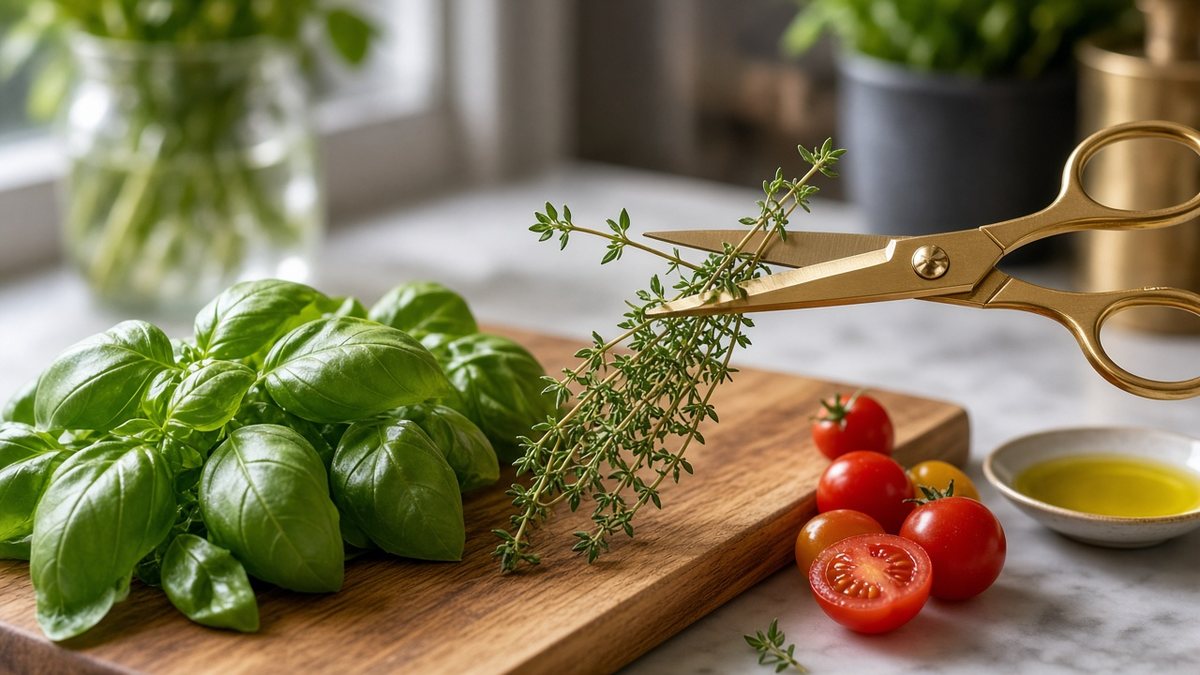
Food & Wine’s soil-based pick, the Spade to Fork Indoor Herb Garden, fits a windowsill, holds five plants, needs no power and includes a thermometer. It’s more hands-on than hydroponics. Check current price on Amazon
Running low on pods? Click & Grow pods | AeroGarden seed pod kits
How to choose an indoor herb garden
Pods, seeds or seedlings. Pre-seeded pods (Click & Grow, AeroGarden, EDN) are the easiest and often guaranteed. Seed-your-own systems like the iDOO let you grow anything, but Serious Eats warns old or poorly stored seeds may not germinate. Lettuce Grow ships live seedlings.
Hydroponic vs. soil. Food & Wine says hydroponic systems are easy and low-maintenance but need electricity and compatible refills; soil-based gardens cost less and are more hands-on.
Size and capacity. Most small systems hold three to nine pods. Serious Eats points out larger units hold nine to 12, while three-pod gardens fit tight counters. Pick based on how much you cook with herbs.
Adjustable light. Serious Eats found light height important: as plants grow, the light needs to rise, and the farther the light, the slower the growth.
Plan your layout. Serious Eats saw failures when fast growers like parsley or dill shaded slower herbs like rosemary. Keep gardens away from open windows and hot stoves, and expect to prune and occasionally clean the tank.
FAQ
Which herbs grow best indoors?
Serious Eats lists basil, rosemary, thyme, oregano, mint, parsley, chives, tarragon, dill and sage. Valerie Thrasher of Box of Rain Organic Garden Center told Food & Wine leafy greens and tea herbs like chamomile work well too.
Do indoor herb gardens need sunlight?
Not if they have grow lights. Serious Eats notes all the gardens it tested have lights and don’t need to be near a window.
How much maintenance do they need?
Very little: add water and nutrients as needed, prune, and clean the tank now and then. Food & Wine topped up the Click & Grow about once a week.
Are indoor herb gardens a good gift?
Yes. CNET calls them a great gift for green thumbs and people who love to cook, since they supply fresh ingredients right off the counter.
The bottom line
Start with the Click & Grow Smart Garden 3; it’s the one garden all three outlets recommend and the easiest to keep alive. Choose the AeroGarden Harvest Elite if you want six herbs at once, the iDOO if you want to plant your own seeds, and the Lettuce Grow Counterstand Set if it’s a gift that should look as good as it grows.