Le Creuset vs Staub: Which Dutch Oven Should You Buy? (2026)
By Claire Whitmore. Last updated October 23, 2026.
Disclosure: some links on this page are affiliate links, including Amazon links. If you buy through them we may earn a commission at no extra cost to you. It doesn’t change what we recommend. Details are in our affiliate disclosure.
Le Creuset and Staub are the two great French names in enameled cast iron, and a Dutch oven from either is the kind of pot that gets handed down. They cost about the same, they’re both made in France, and both will braise a short rib beautifully. So why do serious cooks argue about them? Because the differences, in the interior enamel, the lid, the weight and the handles, change how each pot cooks and how pleasant it is to live with.
This guide answers one question: should you buy a Le Creuset or a Staub Dutch oven? We compared side-by-side testing from Good Housekeeping and Prudent Reviews with Dutch oven testing from Serious Eats and Bon Appétit, along with the brands’ specifications. We haven’t run our own tests; every result below is credited to its source.
The short answer: buy Le Creuset if you want a lighter pot, a light interior that lets you watch browning, roomier handles and the widest color range. Buy Staub if you want the best searing and moisture retention, a dark interior that hides stains, and a heavier, more rustic pot, usually for a little less money.

Our picks at a glance
| Le Creuset Signature | Staub Cocotte | |
|---|---|---|
| Interior | Smooth, light sand-colored enamel | Textured black matte enamel |
| Lid | Smooth, domed, tight-fitting | Flat and heavy, with self-basting spikes |
| Weight, 5.5-qt round | 11.4 lb (Serious Eats) to 11.6 lb (Bon Appétit) | 13.2 lb (Serious Eats) |
| Handle opening | About 1.25 inches (Prudent Reviews) | Under 1 inch (Prudent Reviews) |
| Knob | Larger; phenolic or steel | Smaller, metal |
| Max oven temperature | 500°F (Bon Appétit and Serious Eats) | Check Staub; metal knob is oven-safe |
| Colors | About 20 (Prudent Reviews) | About 9 (Prudent Reviews) |
| Typical price | Slightly higher | Generally $20 to $30 less (Prudent Reviews) |
| Made in | Fresnoy-le-Grand, France (enameled cast iron) | France |
Interior enamel: watch your food, or hide the stains
This is the most important practical difference. Le Creuset’s smooth, sand-colored interior makes it easy to see browning and fond, the sticky brown bits that make a braise taste deep, so you’re less likely to burn something. Bon Appétit says it produced a beautiful, even sear. The downside is that light enamel shows wear and discoloration over years of cooking, and Bon Appétit warns that scrubbing it pristine with abrasives can shorten the enamel’s life.
Staub’s interior is a textured black matte enamel. Staub says it helps browning, and Good Housekeeping notes that’s the brand’s intent. It also hides stains, so a ten-year-old Staub looks much like a new one inside. The trade-off is that it’s harder to judge how dark your fond is getting.
The lid: Staub’s self-basting spikes really work
Staub’s heavy, flat lid has small spikes or bumps underneath that collect condensation and drip it evenly back onto the food. Prudent Reviews tested this directly by boiling water in both pots and blotting the lids on paper towels: the Staub lid left evenly spread droplets, while the Le Creuset lid left fewer, less evenly distributed ones. In their moisture test, the Staub retained about 8% more liquid.
Good Housekeeping’s side-by-side found the opposite emphasis: Staub’s lid produced nicely reduced broths, while Le Creuset’s smooth lid was tighter-fitting and reduced liquids less. Both effects are small. Prudent Reviews concluded the self-basting lid matters most for dishes like braised chicken that benefit from continuous basting, and makes little difference for soups, chili or sauces.
Weight and handling: Le Creuset is easier to live with
Enameled cast iron is heavy, and a full pot of stew is heavier still. Serious Eats weighed the 5.5-quart rounds at 11.4 pounds for Le Creuset and 13.2 pounds for Staub, and Prudent Reviews found Staub averages about 20% heavier across sizes thanks to thicker walls. Serious Eats said the Le Creuset “hit the sweet spot” with wide, looped handles and manageable weight.
Handles matter with oven mitts on. Prudent Reviews measured Le Creuset’s handle opening at about 1.25 inches and Staub’s at under an inch, and a Good Housekeeping tester found Staub’s smaller knobs harder to use. Bon Appétit also notes Le Creuset’s pots tend to be wider and lower, which gives more room for searing in batches.
If you have wrist or hand issues, or you’ll be lifting a heavy pot in and out of a hot oven often, Le Creuset’s lighter weight and bigger handles are a real advantage.
Heat and cooking performance
Both heat evenly and hold heat superbly. Serious Eats found the Le Creuset heated quickly and seared pork shoulder to a crusty golden brown before braising it to silky ribbons. Staub’s thicker walls hold heat a bit longer, which some cooks prefer for long braises. In practice, both are among the best Dutch ovens you can buy, and differences in your results will come more from technique than brand.
One small Le Creuset caveat from Bon Appétit: covered at a boil, it may sputter a little at the edges. One small Staub caveat from Prudent Reviews: the insides of its side handles are bare cast iron rather than enamel.
Knobs, oven use and bread baking
Staub comes with a metal knob. Le Creuset now offers metal knobs too; Bon Appétit notes its older black phenolic knobs could melt at bread-baking temperatures around 450°F. If you bake no-knead bread, choose a Le Creuset with a stainless knob or swap the knob. Both brands’ pots are induction compatible. Serious Eats lists Le Creuset’s max heat at 500°F.
Colors, sizes and price
Le Creuset offers far more colors, about 20 versus Staub’s nine by Prudent Reviews’ count, from bright Flame orange to soft pastels, and both brands offer a wide range of shapes and sizes. Staub’s palette is deeper and more muted, with its signature dark blue, cherry and graphite. Prices are close; Prudent Reviews found Staub generally $20 to $30 cheaper by size. Serious Eats listed the Le Creuset 5.5-quart at $455 at the time of testing. Both brands are heavily discounted during holiday sales.
Warranty and durability
Both are built to last decades. Le Creuset carries a limited lifetime warranty, and Serious Eats editors report decades-old pots with no chips. Bon Appétit notes all Le Creuset enameled cast iron is still made in its original foundry in Fresnoy-le-Grand, France. Check Staub’s warranty terms for your region before buying.
Which pot for which cook?
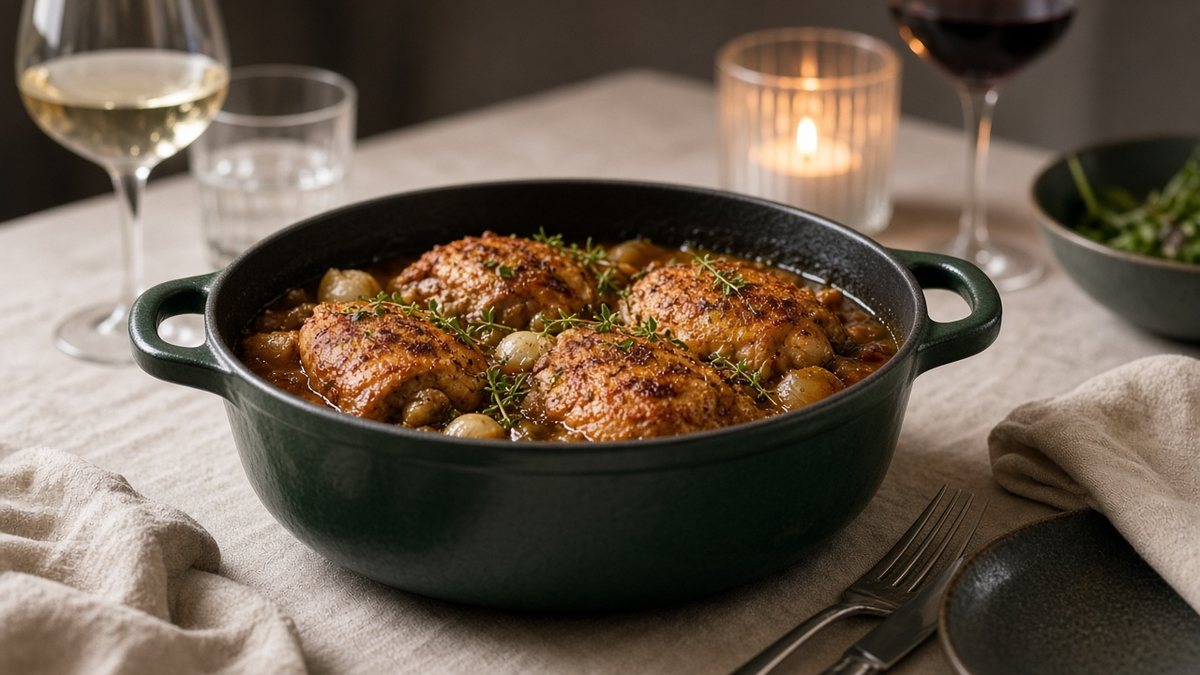
- You braise short ribs, coq au vin and pot roast every winter: Staub’s self-basting lid and heat retention are made for you.
- You make soups, stews, chili and pasta sauce most often: either works; Le Creuset’s lighter weight makes weeknight cooking easier.
- You’re still learning to brown meat and build fond: Le Creuset’s light interior helps you see what’s happening.
- You bake no-knead bread: either, with a metal knob. Staub’s heavier lid traps steam well; Le Creuset is easier to lift out of a 450°F oven.
- You want a pot that looks good on the table: Le Creuset for color, Staub for a rustic, darker look.
- You have limited hand strength: Le Creuset, or Staub’s lighter Essential French Oven.
Other enameled Dutch ovens to know
If neither brand’s price appeals, Serious Eats’ Dutch oven testing gives useful context. Its weights included Made In’s round enameled Dutch oven at 13.6 pounds, Emile Henry’s Sublime ceramic Dutch oven at just 7.8 pounds, and several budget enameled pots heavier than either French brand. Lighter isn’t always better, since mass helps hold heat, but it’s worth knowing that ceramic options exist for people who find cast iron too heavy. For most buyers, though, Le Creuset and Staub remain the benchmarks because of their enamel quality, consistency and decades-long track record.
Our recommendations
1. Le Creuset Signature 5.5-Quart Round Dutch Oven
Best for: most home cooks, first-time buyers and anyone who values lighter weight and visibility.
Serious Eats’ and Bon Appétit’s long-time favorite, with a light interior, wide handles, many colors and a limited lifetime warranty.
Pros
- Lighter, easier to handle
- Light interior shows browning
- Huge color range
Cons
- Light enamel shows wear
- Usually slightly pricier
2. Staub Round Cocotte, 5.5 Quart
Best for: braising enthusiasts and cooks who want a dark, stain-hiding interior.
Heavier and thicker, with a self-basting lid that measurably redistributes moisture and a black matte interior designed for browning.
Pros
- Self-basting lid
- Dark interior hides stains
- Usually a little cheaper
Cons
- Heavier
- Smaller handles and knob
3. Staub Essential French Oven: a lighter Staub
Best for: Staub fans who want something easier to lift.
Serious Eats weighed Staub’s Essential French Oven at 11 pounds, lighter than both 5.5-quart rounds, making it an option if you want Staub’s design with less heft.
Pros
- Lighter than the classic cocotte
- Staub interior and lid style
Cons
- Different shape from the classic round
4. Le Creuset Signature 7.25-Quart Round
Best for: families, batch cooks and whole-chicken roasters.
If you regularly cook for six or more, step up a size. Remember it gets much heavier when full.
Pros
- Room for big batches
- Same lifetime build
Cons
- Heavy when full
- Takes more storage space
How we researched this guide
We started from the question shoppers actually ask about Le Creuset and Staub, then read the most recent published testing from Good Housekeeping, Prudent Reviews, Serious Eats and Bon Appétit. We cross-checked every specification, warranty and price we mention against the brand’s own site or the cited review, and we left out claims we couldn’t verify. We haven’t tested these products ourselves, so we tell you whose results we’re quoting. Weights and prices differ slightly between sources and change over time, which is why we show the range.
FAQ
Is Staub or Le Creuset better?
Neither is objectively better. Le Creuset is lighter with a light interior and more colors; Staub is heavier with a self-basting lid and stain-hiding black interior.
Which is better for bread?
Both work well. Make sure the knob is metal; older Le Creuset phenolic knobs can melt at high temperatures.
Does the Staub self-basting lid make a difference?
Testing shows it distributes condensation more evenly and retains slightly more moisture. It matters most for braises and roasts, less for soups.
Why does my Le Creuset interior look stained?
Light enamel naturally discolors with use. Gentle cleaning is fine; avoid harsh abrasives that can wear the enamel.
Are they worth the price over cheaper brands?
For durability, even heating and longevity, both have long track records. If budget matters, our guide to luxury cookware sets covers alternatives.
The bottom line
Choose Le Creuset if you want the easier pot to lift, a light interior that helps you cook, and the most colors. Choose Staub if you want maximum heat and moisture retention, a forgiving dark interior and a more rustic look. You’ll be happy with either for decades; pick the one whose quirks you’ll enjoy.
Related LifetimeLuxury guides
- The best luxury cookware sets
- High-end stoves and ranges
- The best luxury gifts for home cooks
- The best luxury knife sets
- The best cast-iron skillets
- The best Dutch ovens
Related guide: Is Le Creuset Worth It? An Honest Look at the Price.
Related guide: All-Clad vs Made In: Which Stainless Cookware Wins?.